

First, the chemical anchors mentioned here refer to chemical anchoring systems that use adhesive to anchor to concrete, including high-strength chemical anchors, special reverse-cone chemical anchors, and capsule chemical anchors. When selecting large-size and non-standard chemical anchors, designers often require greater load capacity, so how to fully exploit their mechanical properties is very important.
Installation of large-size and non-standard high-strength chemical anchors
As we know, high-strength chemical anchors are generally used together with chemical cartridges. On the market, chemical cartridges are available for chemical anchors up to M30; cartridges for larger sizes are basically hard to find. Take Daring's own grade 8.8 M30×380 chemical anchor as an example: with an embedment depth of 280 mm, when used with a chemical cartridge the pull-out test fails by concrete failure at the adhesive interface and the threaded rod is pulled out; but when used with Daring's epoxy injection anchoring adhesive, the pull-out test fails by anchor rupture, with a force value reaching 480 kN. The difference need not be spelled out.
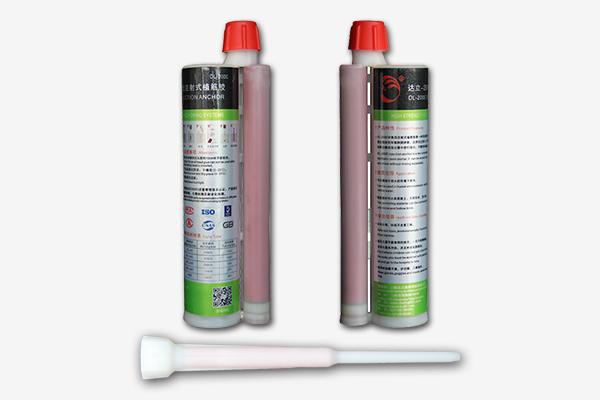
Figure 1. Epoxy injection anchoring adhesive
The author suggests that high-strength chemical anchors of M24 and above may be considered for use with epoxy injection anchoring adhesive. On one hand, this significantly improves load performance; on the other hand, it saves the chemical anchor manufacturer trouble, since cartridges for large-size high-strength chemical anchors are not always in stock. Of course,epoxy injection anchoring adhesive costs more.In addition, custom non-standard high-strength chemical anchors often feature a lengthened threaded rod and increased embedment depth, such as the M20×500 chemical anchor. The problem that arises is that a standard chemical cartridge of the same specification does not contain enough resin; if forced into use, the load capacity falls short of requirements, and having the manufacturer produce custom lengthened chemical cartridges is a thankless task. In such cases, using epoxy injection anchoring adhesive is also worth considering.
Post-installed anchoring in cracked concrete
It is basically common knowledge that ordinary high-strength chemical anchors cannot be used in cracked concrete. Standards require the use of special reverse-cone chemical anchors and capsule chemical anchors in cracked concrete, together with injection anchoring adhesive. Thus, both national standard and non-standard models need to be used with injection anchoring adhesive.
Advantages and disadvantages of injection anchoring adhesive
The recommendation above is that injection anchoring adhesive should be used as far as possible for non-standard and large-size chemical anchor products. Compared with chemical cartridges, injection anchoring adhesive has more advantages, especially in mechanical properties, which chemical cartridges cannot match. The differences between the two are shown in the following table:
Table 1. Differences between chemical cartridges and injection anchoring adhesive
Adhesive | Chemical cartridge | Injection anchoring adhesive |
Curing time | Very short | Relatively long |
Ease of installation | Simple | Complex |
Mechanical properties | Good | Better |
High-temperature resistance | Good | Good |
Stability | Good | Better |
Environmental performance | Fair | Excellent |
Price | Low | High |
As can be seen from the table, chemical cartridges have a short curing time and are simple to install, but their mechanical properties and stability are inferior to those of injection anchoring adhesive. Nevertheless, they are sufficient for conventional building anchoring; as long as the standard is met, the cheaper chemical cartridge can be selected. However,For the large-size and non-standard chemical anchors mentioned in this article, injection anchoring adhesive should be used as far as possible to ensure overall mechanical performance and stability.