

Hot-dip galvanizing, also known as hot-dip zinc coating, is one of the most effective anti-corrosion methods and is mostly applied to metal parts. Daring produces many anchoring products, and both anchors and cast-in channels use the hot-dip galvanizing process. How to judge the quality of the process and what counts as compliance with the standard are the topics of this article.
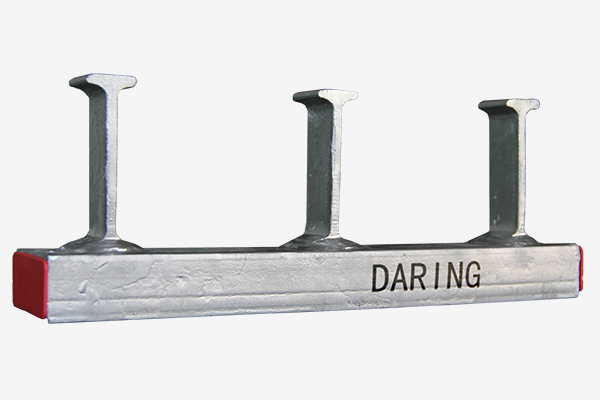
Figure 1: Hot-dip galvanized cast-in channel
Requirements for coating thickness
The hot-dip galvanizing process requirements for anchors or cast-in channels used in curtain walls or rail transit are not particularly high; the emphasis is more on zinc coating thickness. GB/T 13913-2002 Metallic Coatings—Technical Requirements and Test Methods for Hot-Dip Zinc Coatings on Iron and Steel Articles contains the following statement:
6.2 Thickness
Coating thickness testing shall be sampled in the quantities specified in Clause 5 and tested by the methods specified in 7.2. Depending on the area of the relevant major surface (see 3.5) of the hot-dip galvanized article, the measured coating thickness shall meet the following requirements:
a) For articles (i.e., large pieces) whose relevant major surface (see 3.5) exceeds 2m2, the mean coating thickness measured over all basic measuring surfaces (see 3.7) of each article in the sample shall not be below the corresponding minimum mean coating thickness in Table 2 or Table 3;
b) For articles whose relevant major surface (see 3.5) is 2m2 or less, the local coating thickness measured within each basic measuring surface (see 3.7) shall not be less than the minimum local thickness in Table 2 or Table 3, and the mean coating thickness measured over all basic measuring surfaces (see 3.7) of the sample shall not be below the corresponding minimum mean thickness in Table 2 or Table 3.
Note: The corrosion-protection duration of hot-dip galvanized coatings is roughly proportional to coating thickness. For articles exposed to severely corrosive conditions and/or requiring longer service life, coating thickness requirements may exceed those specified in this standard. However, zinc coating thickness is limited by factors such as the chemical composition of the substrate, the surface condition of the article, the article's geometry, and the hot-dip galvanizing process parameters. Where thicker coatings are needed, the supplier and purchaser should discuss the technical feasibility of hot-dip galvanizing and specify the relevant technical conditions (see Annex C).
Table 2 Minimum coating thickness without centrifuging
Article and its thickness/mm | Local coating thickness/um min | Mean coating thickness/um Min |
Steel thickness ≥6 | 70 | 85 |
3 ≤ steel thickness <6 | 55 | 70 |
1.5 ≤ steel thickness <3 | 45 | 55 |
Steel thickness <1.5 | 35 | 45 |
Cast iron thickness ≥6 | 70 | 80 |
Cast iron thickness <6 | 60 | 70 |
Note: This table gives general requirements; specific product standards may contain various requirements including different thickness grades and classifications, and, where not conflicting with this standard, may add requirements for thicker coatings and other requirements. |
Table 3 Minimum coating thickness after centrifuging
Article and its thickness/mm | Local coating thickness/um min | Mean coating thickness/um Min | |
Threaded articles | Diameter ≥20 | 45 | 55 |
6 ≤ diameter <20 | 35 | 45 | |
Diameter <6 | 20 | 25 | |
Other articles (including cast iron articles) | Thickness ≥3 | 45 | 55 |
Thickness <3 | 35 | 45 | |
Note 1: This table gives general requirements; fasteners and specific product standards may have different requirements (see 4.1.2.g). Note 2: For galvanized articles with blast finishing instead of centrifuging, or with both, see Annex C.4. |
The steel thickness of cast-in channels is generally 3-6mm, so their coating thickness must meet the requirements of 6.2 b): a mean thickness above 70um and a local thickness of at least 55um. For anchors, the requirements for threaded articles in Table 3 apply: when the threaded article's diameter is 20mm or more, the mean hot-dip galvanized coating thickness should be above 55um with a local thickness of at least 45um; when the diameter is 6-20mm, the mean hot-dip galvanized coating thickness should be 45um with a local thickness of at least 35um.
Testing of zinc coating thickness
For anchors and cast-in channels, zinc coating testing is generally completed before shipment—in other words, quality inspection. The number of pieces inspected follows the standard cited above:
5 Sampling
Samples for coating thickness testing shall be drawn at random from each inspection lot (see 3.6), and each lot shall yield no fewer than the minimum number of articles specified in Table 1 to form the sample.
Table 1 Sample size by lot size
Number of articles in the inspection lot | Minimum number of articles required in the sample |
1~3 | All |
4~500 | 3 |
501~1200 | 5 |
1201~3200 | 8 |
3201~10000 | 13 |
>10000 | 20 |
For self-inspection, manufacturers must follow the quantities in the table above and must not make their own judgments. In addition, most purchasers use third-party submission testing, in which case they only need to sample and submit the quantities shown in the table. There are several methods for testing zinc coating thickness, divided into destructive and non-destructive tests. The building materials industry generally chooses destructive testing, since the cost is much lower; for details refer to the standard mentioned earlier.
If an article's coating thickness fails to meet the requirements of the tables above during testing, a second test is required, carried out as follows:
If the sample's zinc coating thickness does not meet these requirements, a doubled sample shall be drawn from the lot (or all articles tested if the lot contains fewer than the minimum). If the larger sample passes the test, the lot is deemed acceptable; if it fails, the non-conforming articles shall be scrapped or, with the purchaser's consent, re-galvanized.
Other requirements
Beyond coating thickness, some purchasers may have other requirements for the galvanizing process, such as surface flatness, adhesion, and zinc peeling or bare spots.
For galvanized articles, having certain appearance requirements is reasonable. GB/T 13913-2002 Metallic Coatings—Technical Requirements and Test Methods for Hot-Dip Zinc Coatings on Iron and Steel Articles sets the following appearance requirements:
6.1 Appearance
Visually inspect all hot-dip galvanized articles: the relevant major surfaces (see 3.5) shall be smooth, free of runs, roughness, and zinc spikes (where such spikes could cause injury), free of peeling, uncoated areas, and residual solvent dross, and areas that could affect the use or corrosion resistance of the hot-dip galvanized work shall be free of zinc lumps and zinc ash.
Note 1: "Rough" and "smooth" are relative concepts; the roughness of an article's coating differs from that of galvanized products finished by mechanical rolling or (and) blowing or wiping (such as galvanized steel sheet and galvanized steel wire).
Provided the coating thickness exceeds the specified value, dull or light-gray areas of uneven color are permitted on the surface of galvanized articles. For galvanized work stored under humid conditions, white rust (a white or gray corrosion product consisting mainly of basic zinc oxide) is permitted on the surface.
Note 2: It is impossible to establish a definition of appearance and finish that covers all practical requirements.
After visual appearance inspection, non-conforming articles shall be repaired or re-galvanized in accordance with 6.3.2 and then submitted for re-inspection.
Where there are special requirements (for example, painting after galvanizing), samples shall be provided accordingly (see 4.1.2 and Annex C.1.4).
These are the standard's appearance requirements. Purchasers should not compare galvanized products with craftwork, but they can compare them horizontally with peers' products, which makes it easy to understand the industry level and the hot-dip galvanizing quality of each brand's products.
Conclusion
For the hot-dip galvanizing process, meeting both the standard's requirements and the purchaser's requirements is what best serves a project. Hot-dip galvanizing involves many aspects beyond coating thickness; GB/T 13913-2002 Metallic Coatings—Technical Requirements and Test Methods for Hot-Dip Zinc Coatings on Iron and Steel Articles provides a detailed introduction, and readers interested in the specifics of the process may consult it carefully.