

The curtain wall pendants discussed here mainly refer to slotted stone pendants, used mainly for dry-hung stone on curtain wall facades. If you know the evolution of dry-hung stone curtain wall facades, you know that today's mainstream slotted hanging is mostly the short-slot method within edge-slot hanging, The short-slot method can use various pendants, most of which have been highly controversial.
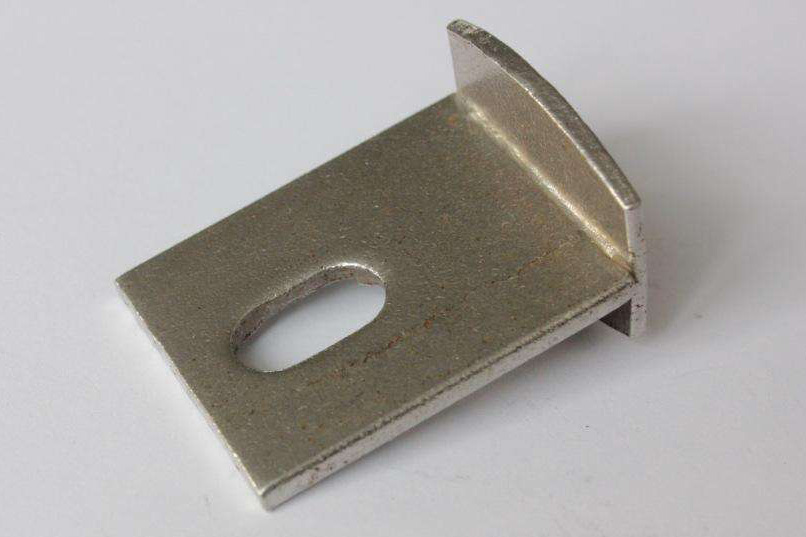
Figure 1: One of the controversial pendants—the T-type pendant
National standard provisions
Short-slot pendants currently in use include L-type pendants, T-type pendants, R-type cantilever pendants, butterfly pendants, and SE pendants. JGJ 133-2001 Technical Specification for Stone Curtain Wall Engineering and Its Commentary, still in force, imposes few restrictions on slotted pendants, and all the short-slot pendants mentioned above may be used. However, some regions have long restricted certain pendants through local codes.
Restrictions in some regions
After the national code was issued and years of practice, the use of L-type pendants, T-type pendants, R-type cantilever pendants, and butterfly pendants has all come into question.
In 2010, Beijing issued the Catalog of Building Materials Promoted, Restricted, and Prohibited in Beijing (2010 edition), item 12 under "III. Catalog of Prohibited Building Materials" is the "curtain wall T-type pendant system", prohibited because "curtain wall units cannot be disassembled independently, making maintenance inconvenient."The curtain wall T-type pendant system here covers most short-slot pendants except SEcombination pendants. These pendants share one common feature: a single pendant connects the upper and lower stone panels.
In 2012, DGJ08-56-2012the Technical Specification for Building Curtain Wall Engineering in Shanghai contained the following provision: "10.4.8 Panels may be supported by short slots, through slots, back bolts, or similar means. Connections and supports of panels shall not use steel pins, T-type connectors, or angled inclined connectors."This mirrors the Beijing code and likewise prohibits one-piece pendants such as T-type pendants。
In 2013, Zhejiang Province issued ZJSP16-2013-002Safety Technical Requirements for Building Curtain Walls, Zhejiang Construction Document (2013)2 document), which contains the following statement: "3.5 The connection between curtain wall facing materials and the supporting frame shall be safe and reliable. Connections for inverted single panels of dry-hung stone curtain walls and between solid strip lines shall use anchoring techniques, not adhesive alone. Dry-hung stone curtain walls shall not use inclined insert-type pendants or T-type pendants. Stone curtain walls exceeding 100 meters in height shall use back bolt connections."This explicitly prohibits insert-type pendants and T-type pendants。
What is the controversy?
The main reason decoration contractors use these controversial pendants is obvious to most: saving money. In reality, however, both later maintenance difficulty and safety performance pose certain problems. But once money is involved, most simply choose whichever is cheaper—especially with no national standard restrictions. It is hoped that national authorities will later introduce more standardized requirements to ensure the overall safety and usability of building exteriors.