

Among common curtain wall anchors, the undercut anchor plays a pivotal role. Its load performance is excellent, and it is the anchoring product most recommended by building codes. But a good product must be paired with good workmanship—improper installation can cause serious safety accidents.
The difference between undercut anchors and expansion anchors
Most installation problems arise because workers do not recognize undercut anchors and install them as if they were expansion anchors—simply drilling a straight hole and hammering the anchor in—unaware that an undercut anchor installed this way performs even worse than a sleeve expansion anchor. Undercut anchors use more material than sleeve expansion anchors, and the material is better. Take the sleeve: a common M12 undercut anchor has a wall thickness close to 3mm, while a sleeve expansion anchor's is just over 1mm. Without reaming, the bottom of the undercut anchor's sleeve can hardly expand when hammered, and on-site pull-out tests typically show capacities below 20kN—extremely poor performance. Sleeve expansion anchors, by contrast, perform somewhat better in friction-based load capacity, often reaching 25-30kN.
In fact, undercut anchor installation requires secondary reaming, but this is often the step workers most frequently omit. With the bottom of the sleeve fully expanded, an undercut anchor delivers excellent load performance: at standard embedment depth it can basically reach the ultimate load capacity of the anchor's threaded rod, and the test result should be rod fracture—clear evidence of its anchoring effect, as the ultimate load capacity of a standard grade 5.8 undercut anchor can exceed 50kN. I recommend that workers understand the difference between undercut anchors and expansion anchors before starting work.
The benefits of reaming
Just as hole cleaning and dust blowing matters for chemical anchor installation, secondary reaming with a special drill bit is also extremely important for undercut anchor installation, as the load capacity without reaming and after secondary reaming may differ by more than 3 times, and without reaming the capacity usually fails to reach the design value, which directly becomes a criterion for judging whether the work is acceptable.
It is worth noting that undercut anchors also require simple hole cleaning after drilling—just ensure that dust does not clog the hole and impede subsequent anchor installation; there is no need for the repeated hole cleaning and dust blowing required in chemical anchor installation.
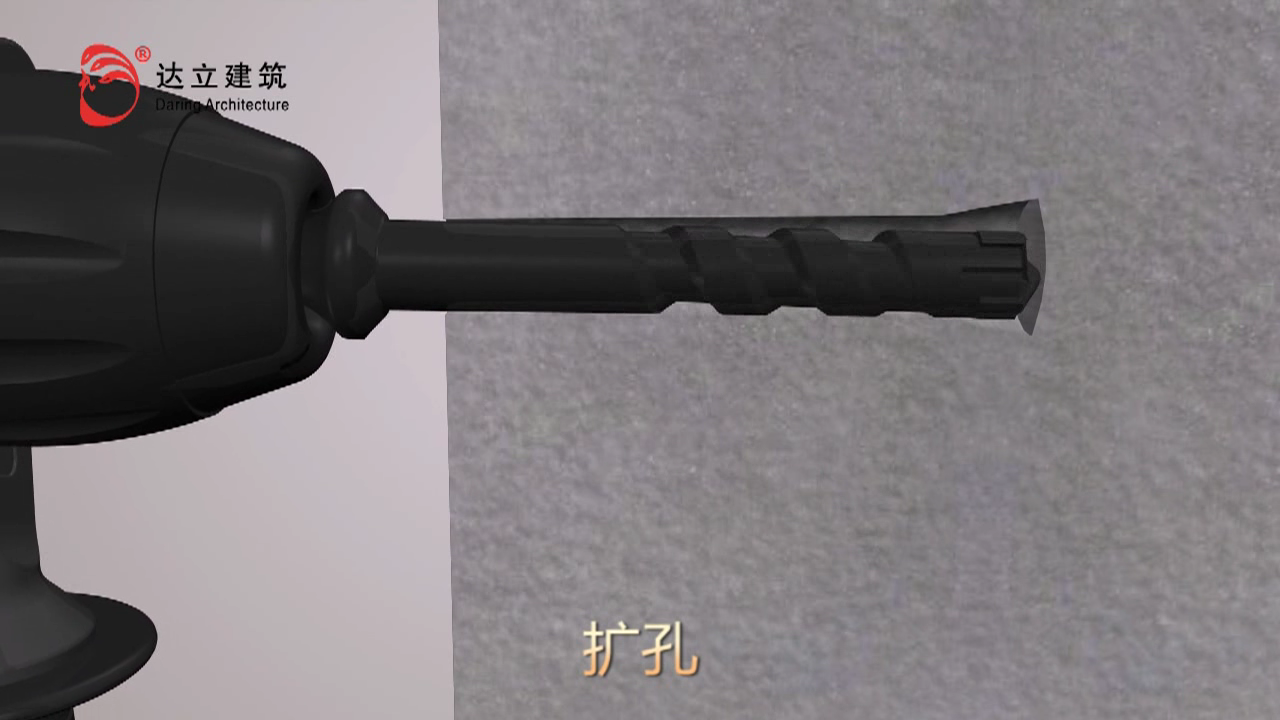
Figure 1: Diagram of reaming
What can manufacturers do?
As an undercut anchor manufacturer, Daring also provides corresponding after-sales service after the products are sold. The most useful is providing technical briefings to supervisors and contractors and giving supervisors corresponding acceptance procedures, which effectively reduces safety risks caused by lack of knowledge or cutting corners.