

As important structural components, anchors are mostly used for anchoring in concrete. High-strength anchors here refers mainly to anchors of grade 8.8 strength or above. In actual projects, grade 8.8 anchors are used in considerable quantities, especially chemical anchors and undercut anchors, and quite a few problems arise during their use.
Characteristics of grade 8.8 anchors
Compared with the more commonly used grade 5.8 anchors, grade 8.8 anchors offer better tensile and shear load capacity, which is the main reason why projects with higher load demands use these anchors. However, anyone with processing experience knows that grade 8.8 anchors can reach a Rockwell hardness of 22-32HRC; the higher hardness comes with higher brittleness, making them relatively more prone to breakage during installation, which increases installation time and difficulty.
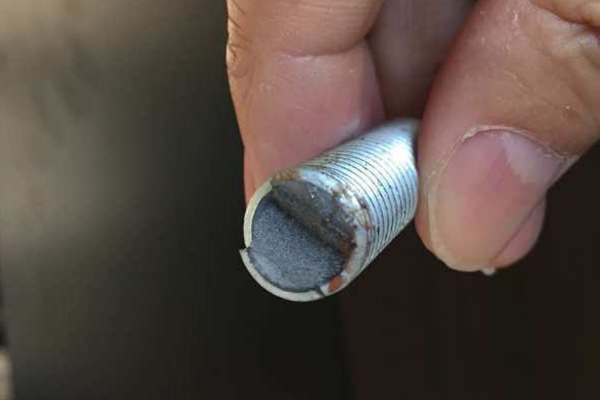
Figure 1: Example of anchor brittle fracture
Causes of brittle fracture in grade 8.8 anchors
If you have purchased grade 8.8 anchors and find that they are highly prone to brittle fracture during use, the causes are likely one of the following:
(1) Material issues. This is easy to understand: for example, excessive carbon content in alloy steel can cause widespread brittle fracture, and once such anchors are put into service, many unexpected problems may arise. In addition, different alloy steels can all reach grade 8.8 strength through heat treatment, but different materials vary in their sensitivity to processing and differ greatly in intrinsic quality. Simply put, choosing reliable materials reduces the demands on processing. Moreover, manufacturers often lack in-house heat treatment lines, leaving the entire processing chain uncontrolled, so batches of problematic anchors are inevitable. This is why manufacturers' self-inspection and project testing are so important.
(2) Processing issues. High-strength anchors have high hardness. After reviewing considerable literature and conducting repeated tests, I found that once the Rockwell hardness reaches 30 or above, sensitivity to hydrogen becomes very high, and the cumulative effects of subsequent pickling, electroplating, and degreasing processes can produce the so-called "hydrogen embrittlement" effect, making the hydrogen-removal process especially important. Therefore, when manufacturing grade 8.8 anchors, keeping the Rockwell hardness below 30 is relatively safer. In addition, the heat treatment process must be handled carefully: incorrect heat treatment can create a hard, brittle microstructure on the bolt surface, leading to large-scale brittle fracture.
(3) Installation issues. This is probably the most common problem encountered today. Building anchors are mostly used in concrete, which typically contains dense rebar layouts, so the probability of hitting rebar when installing anchors is very high, especially for large-size anchors. Having visited many construction sites, I found that when workers encounter this situation, they mostly choose to drill the hole at an angle and then use a hammer to adjust the anchor's installation direction after setting it. This works more or less for grade 4.8 and 5.8 anchors, but it is clearly unfavorable for grade 8.8 anchors. On some sites the bending angle even reaches 45 degrees, making breakage highly likely; even if the anchor does not break, its mechanical properties drop by half or more.The correct installation method is to install as perpendicular to the concrete as possible; if adjustment is necessary, the angle should be corrected only minimally, using a hollow steel tube to straighten the anchor slowly, which causes far less damage to the anchor.