

For undercut anchors and self-undercutting anchors, their load performance is among the best of anchors for the same kind of use, and there is no need to worry about problems caused by adhesive curing as with chemical anchors — both safety and performance are assured.
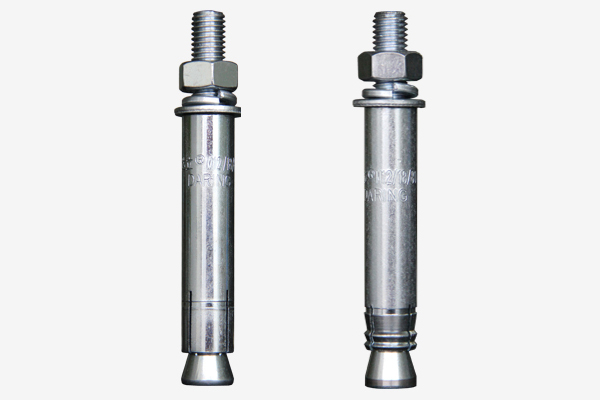
Figure 1. Undercut anchor (left) / self-undercutting anchor (right)
The most commonly used model of undercut anchors is M12×80×125, where M12 stands for the rod outer diameter, 80 for the embedment depth, and 125 for the overall length. This model is relatively well balanced in all respects. Whether undercut or self-undercutting, when an M12 anchor reaches an embedment depth of 80mm, even in grade 8.8 carbon steel, the pull-out test result is rod breakage. Yet in 2018, the author found many buyers purchasing M12×100×150 undercut anchors and self-undercutting anchors, which is really puzzling.
Generally speaking,the deeper the embedment depth of an anchor with the same outer diameter, the higher the probability of hitting rebar when drilling, and the drilling difficulty also increases accordingly.Moreover, the drill hole diameter for an M12 undercut anchor is 18mm, the same as the drill hole diameter of an M16 chemical anchor, which is already fairly large. The author really cannot see the point of such schemes that increase the embedment depth for no reason, yet it seems that more and more projects have adopted them.
This problem is not unique to undercut anchors; chemical anchors used on some projects have the same issue. For example, an M12 chemical anchor can break the rod at the standard embedment depth of 110mm; in some bizarre cases, the embedment depth of M12 chemical anchors was even set at more than 200mm. Such schemes are no different from undercut anchors with increased embedment depth — all of them thankless efforts.
It is worth mentioning thatundercut anchors basically have no large-size products. Generally, manufacturers only produce undercut anchors up to M16 and self-undercutting anchors up to M20. If you want the anchor itself to have better shear force, consider using larger models of the chemical anchor series as a substitute.