

Autumn and winter are the off-season for chemical anchor sales, but off-season or not, they still have to be used. In some regions, such as the true north, temperatures in autumn and winter are extremely low, with minus thirty degrees Celsius being common, and at such times chemical anchor installation becomes very difficult.
Curing temperatures of chemical anchors
The curing of chemical anchor products mainly depends on the adhesive. The chemical capsule is supplied with the high-strength chemical anchor, while the injection anchoring adhesive is supplied with the reverse-cone anchor and the capsule anchor. The author reviewed the curing temperatures and times of chemical capsules (packs) from many companies and found that when the temperature falls below -5 to -10°C, anchoring basically fails; the injection anchoring adhesive is similar, failing to cure below -10 to -15°C until it becomes ineffective.Moreover, in winter both cure rather slowly. Near the critical temperature, complete curing of the injection anchoring adhesive may take 6-8 days, seriously delaying construction schedules.
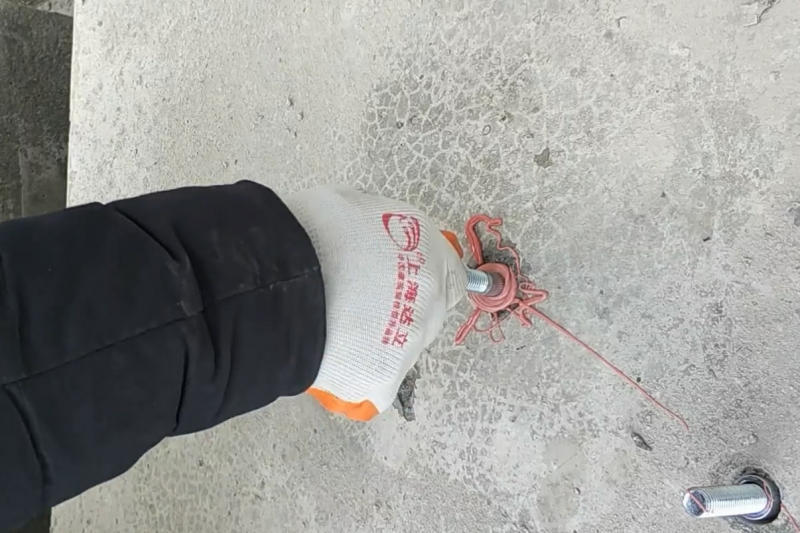
Figure 1. Chemical anchor installation diagram
How to work quickly
The time of a chemical reaction is hard to change, which determines that chemical anchor products are inherently unsuitable for use at low temperatures. To work efficiently, we can only look for alternatives. Having understood the difference between chemical anchors and mechanical anchors, we know that the main reason mechanical anchors can replace chemical anchors in winter construction is that they can complete anchoring without any adhesive.
However, finding an alternative requires considering many factors; it is not simply a matter of swapping products.
① Load performance must be considered. Load performance is the main factor determining safety, and only when the corresponding design values are met can the product be put into use.
② Cost must be considered. The project budget is fixed; after changing materials, the budget must be recalculated and can only be approved within a reasonable budget range, while exceeding the budget makes approval very difficult.
③ Other issues must be solved, such as how to obtain the approval of the owner or the designer after changing the scheme.
Two alternatives are provided here:One is to replace them with undercut anchors (self-undercutting anchors and undercut anchors). This is not a perfect solution, because large-size chemical anchors cannot be replaced this way, and undercut anchors are considerably more expensive than chemical anchors, adding quite a lot to the project budget. The good news is that the load performance of undercut anchors is generally better than that of chemical anchors.The other is to use expansion anchors or concrete screw anchors. Because the codes do not allow expansion anchors or concrete screw anchors on load-bearing structures, they must be used in strict accordance with the codes. Expansion anchors are relatively inexpensive, but their load capacity lags behind that of chemical anchors. If the load capacity can meet the design requirements, these two types of anchors are also good choices, and the replacement scheme has a relatively high chance of approval.