

In the industry, all non-chemical-adhesive anchors are generally referred to as mechanical anchors. Clause 3.1.1 of JG/T 160-2017 'Mechanical Anchors for Concrete' defines mechanical anchors as follows:
A component anchored to the concrete substrate by friction or key-locking action between the anchor and the drilled hole; its main load-bearing parts consist of metal fasteners (threaded rod, nut, washer), a conical head, and expansion elements (expansion sleeve or expansion segments).
According to the above definition, we can roughly divide mechanical anchors into mechanical key-lock anchors and expansion friction anchors.
Mechanical key-lock anchors
Mechanical key-locking is one of the effective forms of concrete anchoring and is well recognized in the industry; its main representative products are undercut anchors and self-undercutting anchors. Figure 1 shows the anchoring configuration of an undercut anchor: during drilling, a second reaming operation is required to produce a wedge-shaped hole with a small straight-hole diameter and a larger reamed diameter. Once the undercut anchor is installed, a mechanical key-lock anchorage is formed, and the anchor's load performance is excellent.Generally, pull-out test results for undercut anchors are either anchor rupture or cone failure of the concrete test block. Mechanical key-lock anchors can bring the anchor's own performance into full play.
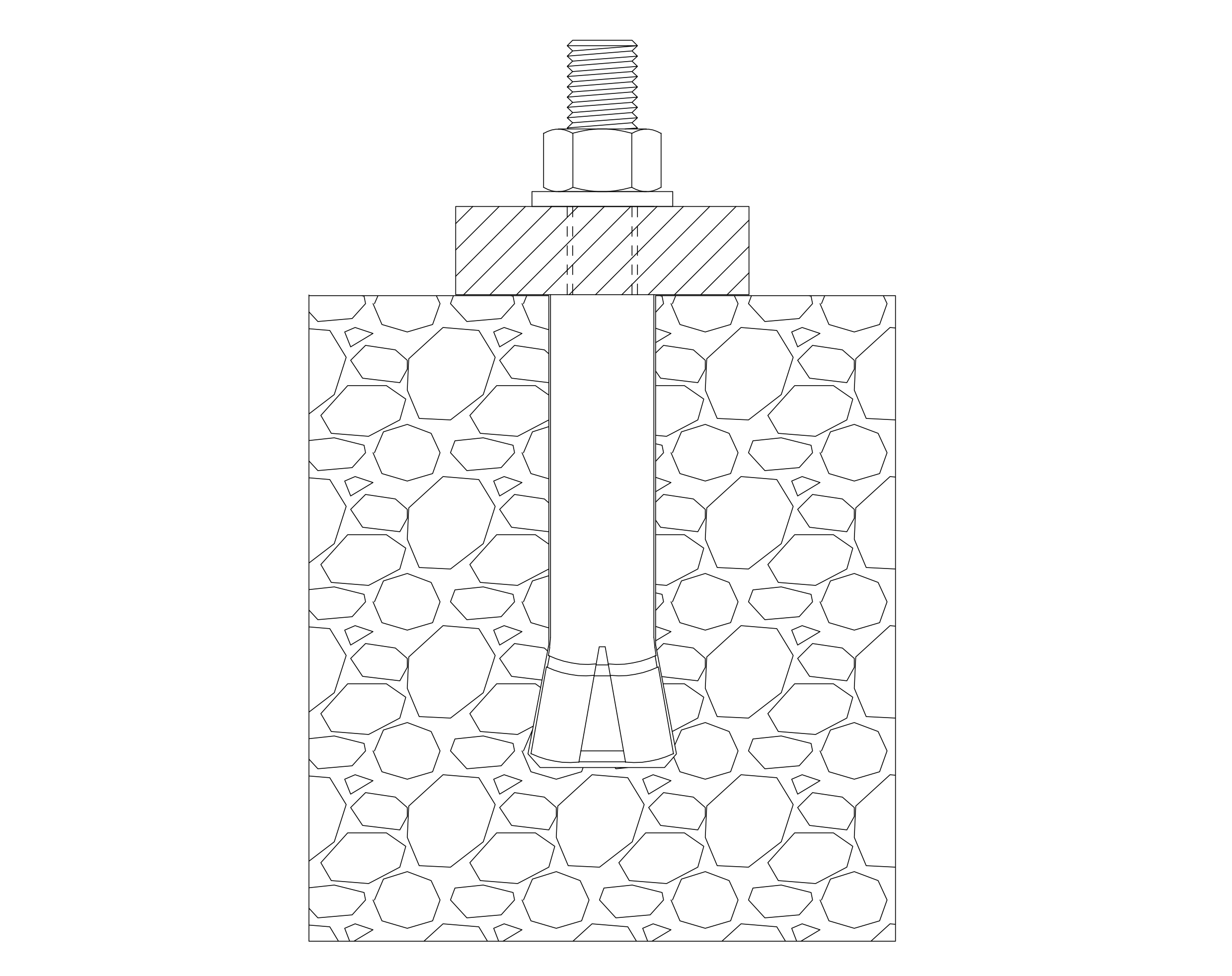 Figure 1. Undercut anchor anchoring configuration
Self-undercutting anchors have an anchoring configuration similar to that of undercut anchors, except that no second reaming operation is required; their safety performance is also good, making them one of the most commonly used anchors today.
Expansion friction anchors
Expansion friction anchors rely on the friction generated between the expansion element on the anchor and the hole wall to achieve anchorage. Anka anchors (machine-cut wedge anchors) and drop-in expansion anchors are two highly representative expansion anchors, and both are used in large quantities; however, their load performance is generally inferior to that of mechanical key-lock anchors.
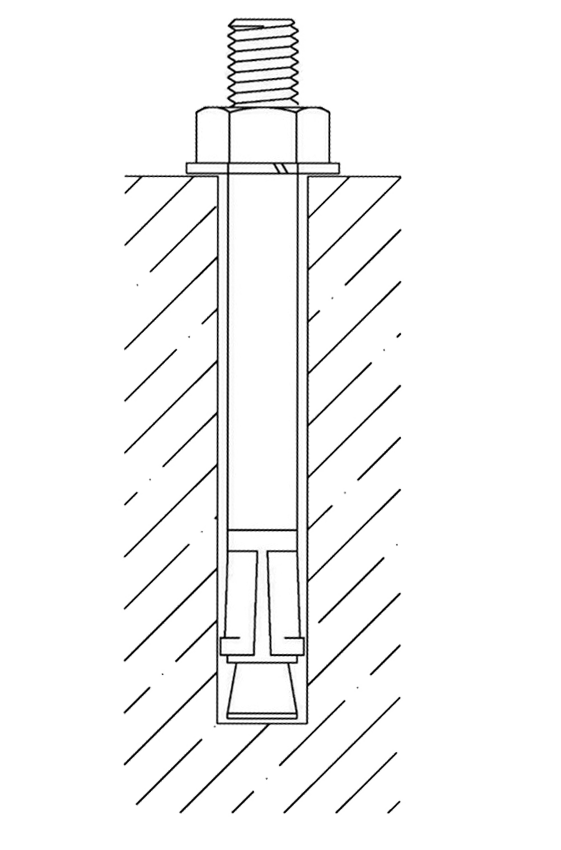
Figure 2. Expansion anchor anchoring configuration
As shown in Figure 2, installing an expansion anchor only requires drilling a straight hole; once the expansion element is compressed, it creates substantial friction against the hole wall, making it suitable for side-hung and overhead hanging of general objects. Taking an M12×50 drop-in expansion anchor as an example, with an embedment depth of only 50 mm, a pull-out test after proper installation can cause cone failure in C30 concrete.
Special characteristics of concrete screw anchors
After reading the above definition of mechanical anchors, you may well wonder about the classification of concrete screw anchors. However, they still appear in JG/T 160-2017 'Mechanical Anchors for Concrete', indicating that they indeed belong to mechanical anchors; the experts simply omitted this type when defining mechanical anchors, and the definition will surely be revised when the next version of the standard is issued. The standard's explanation of concrete screw anchors is as follows:
An anchor that, during screwing into a drilled hole, cuts into and embeds itself in the hole wall by means of its own hard threads.
Concrete screw anchors use a new type of anchoring configuration, accomplished by the anchor's own hard threads cutting thread-shaped grooves into the concrete of the straight hole wall. The installation principle is similar to screwing a self-tapping screw into wood, except that this type of anchor is made of very hard material (generally grade 8.8 or 10.9), which ensures that its own structure is not damaged after cutting into the concrete.
It is worth noting that concrete screw anchors have relatively good load performance and generally cause concrete cone failure in pull-out tests. Moreover, their installation is reversible, making them suitable for temporary anchoring.
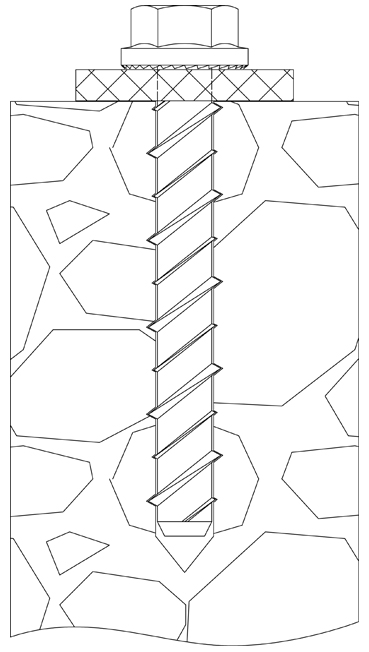
Figure 3. Concrete screw anchor anchoring configuration
Differences in application scope
GB 50367-2013 'Code for Design of Strengthening Concrete Structures' stipulates:
16.1.3 Mechanical anchors used in load-bearing structures shall be undercut anchors with a key-lock effect. Depending on their structural configuration, such anchors are divided into three types: self-undercutting, mold-undercutting, and adhesive-mold-undercutting; adhesive anchors used in load-bearing structures shall be special reverse-cone adhesive anchors.
16.1.4 In structures in seismic fortification zones and in components directly subjected to dynamic loads, expansion anchors shall not be used as connectors for load-bearing structures.
To summarize briefly,Expansion anchors may not be used to secure load-bearing structures; instead, undercut anchors or reverse-cone chemical anchors are required.Generally, expansion anchors are mostly used for anchoring medium- or light-duty structures and for securing low-weight objects. The above standard does not mention concrete screw anchors, nor do other standards address their application scope. This product offers good value for money and will have broader application prospects in the future,in practical applications, concrete screw anchors can serve most of the functions of expansion anchors.