

As the only two types of anchors usable in curtain walls, undercut anchors and self-undercutting anchors have similar uses, but there are certain differences in specifications, usage, and actual construction.
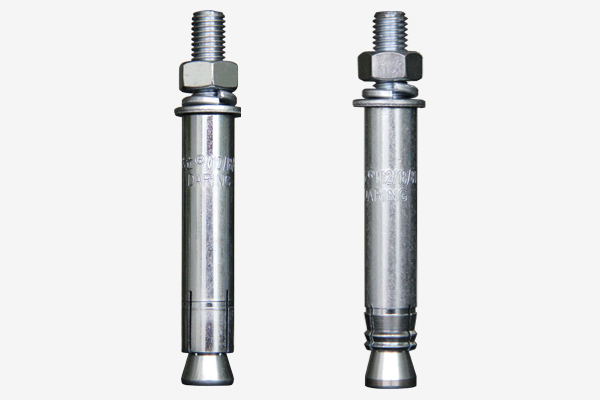
Figure 1 Undercut anchor (left) and self-undercutting anchor (right)
Considerable differences in use
Although the two are similar in mechanical properties, they differ greatly in installation method. The installation of undercut anchors is relatively complicated: after drilling a straight hole, separate reaming is required, and a special reaming bit must be used. Taking an M12 undercut anchor as an example, its reamed size reaches M24, so it is relatively easy to hit rebar during installation. The installation of self-undercutting anchors is much simpler: on the one hand, no separate reaming is needed, which saves considerable man-hours; on the other hand, they can be installed with an electric hammer, making installation very labor-saving.
Different specifications available for sale
As mentioned above, undercut anchors are prone to hitting rebar during installation, which greatly limits their specifications; this is also the main reason why it is difficult to find undercut anchors of M20 and above on the market. For self-undercutting anchors, because there is no separate reaming, the probability of hitting rebar is relatively lower. Therefore, self-undercutting anchors are available in sizes up to M20. However,When using large-size anchors, try to first understand the arrangement of rebar in the concrete in order to develop a reasonable drilling plan.
Safety performance of the two
First, let us discuss the different forms of self-undercutting anchors available on the market. They are mainly divided into two types: one is a self-undercutting anchor using a diamond cutter head, and the other is an anchor that self-reams by adjusting the taper height, slope, and sleeve cuts. The first type provides better reaming than the second, but it is expensive, and the one-time use of the diamond cutter head inevitably involves some waste. The second type, which accomplishes self-undercutting by mechanical means, generally can only partially cut into the concrete during installation and does not achieve the reaming effect of the first type, but it has the advantage of simple construction.
Although the installation of undercut anchors is relatively cumbersome, the pre-reaming operation allows the anchor to expand more fully after installation, so the anchor is basically not pulled out directly during pull-out tests. For small sizes such as M12, the pull-out load of undercut anchors and self-undercutting anchors is very close, but for larger sizes there are some differences in mechanical properties. However, the actual demand for M12 anchors often accounts for more than 60%.
Differences from expansion anchors
An expansion anchor is a mechanical anchor that, once installed in place, develops its anchoring effect through friction between a special mechanical structure and the wall of the concrete hole; representative types include Anka anchors and drop-in expansion anchors. The load-bearing performance of expansion anchors varies greatly depending on the type, but it is generally difficult to reach the level of undercut anchors and self-undercutting anchors. It is best for us to understand the difference between undercut anchors and expansion anchors in order to judge which type of anchor should be used in construction.
Some construction workers on projects are not familiar with undercut anchors and often mistakenly use them as expansion anchors, which is truly dangerous.Before construction, it is hoped that manufacturers, while selling their products, will also provide corresponding technical briefings so that construction workers understand how to use the products and the importance of curtain wall safety.