

High-strength chemical anchorAs one of the most widely used anchors in China today, its performance is critical to the safety of the entire building. This article explains in detail the method of pull-out testing for high-strength chemical anchors. Since much of it involves analysis of national standards, readers who only want the conclusions can go directly to the summary at the end.
Concrete for pull-out testing
Pull-out tests are divided into confined pull-out and unconfined pull-out. Unconfined pull-out places higher demands on the test equipment, so confined pull-out is mostly used. However, due to the high cost and long turnaround of third-party testing, many manufacturers prepare their own concrete samples for confined pull-out tests. So the question arises: with so many types of concrete, what kind of concrete is more suitable for pull-out testing?
We know that high-strength chemical anchors can only be used in non-cracked concrete, so here we discuss only non-cracked concrete. Appendix B of JGJ 145-2013 'Technical Specification for Post-installed Anchoring of Concrete Structures' is 'Test Methods for Chemical Anchors in Concrete', in which:
B.1.9 Installation performance shall be tested for tensile resistance using C25 concrete.
Here, installation performance refers to the maximum failure load an anchor can reach under full load after being installed to the maximum embedment depth (generally the standard embedment depth), usually the pull-out load. The anchor performance we normally test is installation performance. C25 indicates the concrete grade; nowadays some construction units, considering safety, raise the concrete grade to C30, and the reports currently issued by third-party testing institutions are basically based on C30 concrete.
Appendix G of JGT 160-2017 'Mechanical Anchors for Concrete' is 'Concrete Test Specimens', in which:
G.1.1 Sand and gravel aggregates shall comply with GB/T 14684 and GB/T 14865, and the particle size of coarse aggregate shall not exceed 20 mm.
G.1.2 Use Portland cement or ordinary Portland cement complying with GB 175; no other cementitious materials or admixtures shall be added.
G.1.1 and G.1.2 above clarify the concrete materials. The standard JGJ 145-2013 'Technical Specification for Post-installed Anchoring of Concrete Structures' states the following:
7.1.7 The minimum embedment depth of chemical anchors shall meet the requirements of Table 7.1.7.
Table 7.1.7 Minimum embedment depth of chemical anchors
Chemical anchor diameter d (mm) | Minimum embedment depth (mm) |
≤10 | 60 |
12 | 70 |
16 | 80 |
20 | 90 |
≥24 | 4d |
The table above specifies the minimum embedment depth of chemical anchors. The minimum embedment depth for pull-out tests can be determined from the table, which can also serve as the sole criterion for judging whether the embedment depth of chemical anchors in field construction complies with the standard.
Anchors for pull-out testing
Section 8.1.1 of JGT 160-2017 'Mechanical Anchors for Concrete' stipulates:
For factory inspection, the number of test samples for each specification shall be no fewer than 5.
This means that manufacturers need to carry out at least 5 factory inspections for each specification to ensure there are no product quality problems. But such inspection is unreasonable because production is continuous; Daring currently carries out sampling inspection by batch, with a sampling ratio of 3 to 5 ten-thousandths of the actual production quantity for each batch.
On the other hand, factory inspection alone will not be accepted by purchasers; only third-party inspection can provide higher credibility. Section 8.1.2 of JGT 160-2017 'Mechanical Anchors for Concrete' stipulates:
All anchor products used in China shall undergo type testing by a domestic quality supervision and inspection institution qualified to test anchors. Type testing shall be carried out when any of the following situations occurs:
a) Finalization appraisal of new products;
b) After formal production, when changes in product design, materials, process, production equipment, management, etc. may affect product performance;
c) During normal production, periodic inspection every 3 years for Class N and Class C anchors, and every 5 years for Class S anchors;
d) When production is transferred to another factory, or production is resumed after being suspended for more than 1 year.
Leaving other factors aside, this reveals two relatively important points: first, all products must undergo type testing; second, Class N anchors need to be tested every 3 years (high-strength chemical anchors are not mechanical anchors and therefore naturally do not belong to any of the above classes; if they had to be assigned to one, chemical anchors meet more of the conditions for Class N anchors, and currently no standard defines the form of factory inspection for chemical anchors). Here we must mention a concept, namely type testing, the counterpart of which is commissioned testing. Type testing means that the process of selecting samples is also carried out by a third-party testing institution, so as to prove that the test results apply to all products, whereas in commissioned testing the manufacturer directly submits samples, and the results are generally valid only for the samples submitted. However, due to the high cost of type testing, the vast majority of manufacturers can only provide commissioned test results to purchasers, supplemented by on-site sampling inspection at the construction site to prove the validity of the product test results.
The type testing mentioned above applies only to mechanical anchors, and no corresponding standard indicates that chemical anchors require type testing. In theory, however, chemical anchors also need it, but there are no specific detailed provisions on how or in what manner it should be done.
DGTJ08-003-2013 'Test Method for Pull-out and Shear Resistance of Building Anchors' stipulates:
4.4.2 The number of anchor test specimens for each batch shall be selected as follows:
1 Construction project site
1) For destructive tests, the number of specimens shall be no fewer than 3;
2) Non-destructive tests
For general structural components, the number of specimens shall be no fewer than 3;
For important structural components, the number of specimens shall be no fewer than 5.
2 Tests carried out in the laboratory
The number of specimens shall be no fewer than 5.
If testing is carried out in-house, destructive tests are generally more common, with at least 3 specimens; this is the main reason some testing institutions sample 3 pieces. When the purchaser has the corresponding design data, a non-destructive test can be performed: once the tensile force reaches a specified threshold, the test can be stopped and the anchor's tensile capacity is considered qualified.
Pull-out test equipment
DGTJ08-003-2013 'Test Method for Pull-out and Shear Resistance of Building Anchors' sets out the following requirements for pull-out testers:
3.2.1 The anchor pull-out test apparatus shall be capable of continuous and steady loading.
3.2.2 The threads of the loading rod used for the anchor pull-out test must match the anchor threads, with a screw-in depth of no less than the anchor diameter; loading rods with missing threads or severe wear shall not be used.
Here it simply means that a pull-out tester meeting these two conditions can be used for testing. To ensure the effectiveness of the pull-out, the screw-in depth of the pull rod generally reaches 3 times the anchor diameter. For the needs of ordinary companies or manufacturers, choosing a hydraulic pull-out tester is more economical and practical.
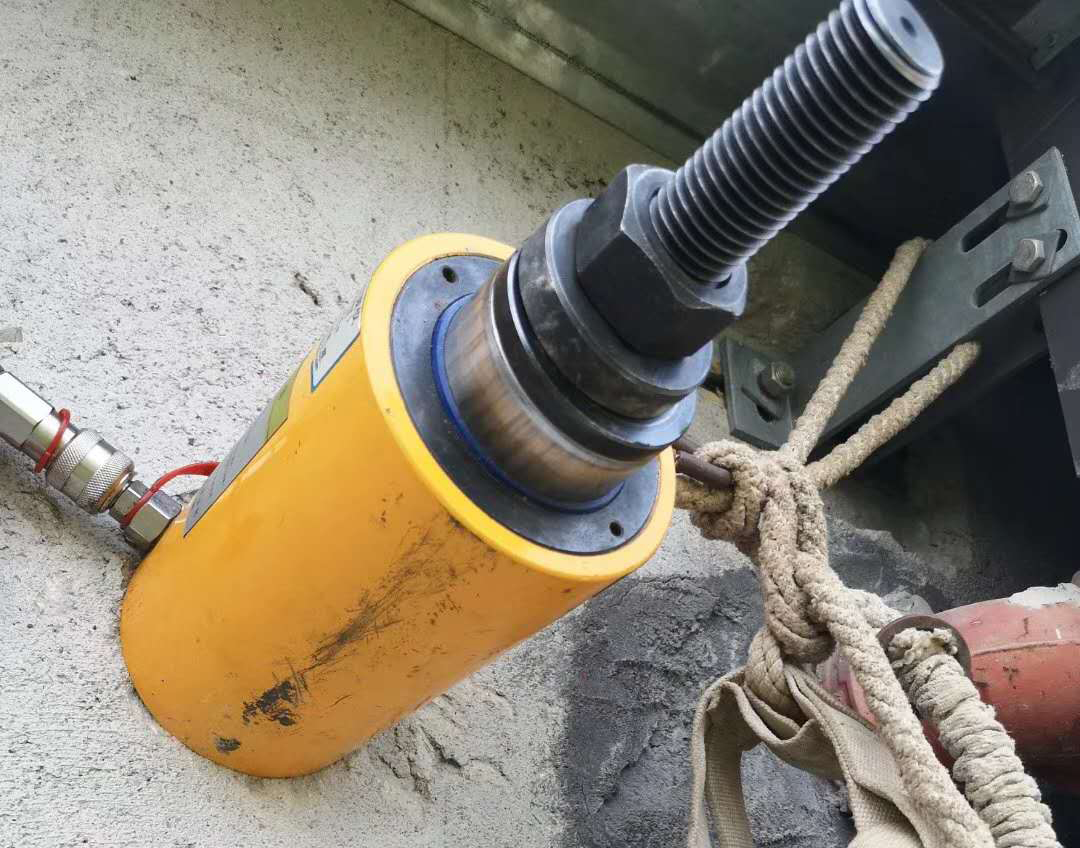
Figure 1. A hydraulic pull-out tester, detail
Pull-out test conditions
JGJ 145-2013 'Technical Specification for Post-installed Anchoring of Concrete Structures' states the following:
B.1.6 The basic tensile performance test shall also comply with the following provisions:
1 The test shall be carried out on dry concrete;
2 The ambient temperature during the test shall be (21±3) °C;
3 The anchors shall be installed in accordance with the product instructions.
B.1.9 The following provisions shall be complied with during the test:
1 The drilling depth shall comply with the product instructions;
2 When cleaning the hole, use the manual air pump and brush provided by the manufacturer and clean in the order specified in the product instructions; the number of blowing and brushing cycles shall be 50% of the number specified in the product instructions, rounded down.
These are the test conditions that must be observed in pull-out testing. It is worth noting that the ambient temperature required here is very strict; in practice, pull-out tests can be carried out at ordinary temperatures, and the test timing should be determined according to the setting time of the anchoring adhesive provided by the manufacturer. It is worth noting that at too low a temperature (< -5 °C), the anchoring adhesive may fail to cure for a long time and subsequently fail.
In addition, the anchors shall be installed in accordance with the product instructions. B.1.9 also mentions drilling depth and hole cleaning, indicating that these two points are relatively important.
DGTJ08-003-2013 'Test Method for Pull-out and Shear Resistance of Building Anchors' states the following:
4.2.3 During the test, ensure that the edges of the base material and the support points of the test apparatus do not spall or become damaged.
4.5.1 The surface of the base material to be tested shall be flat; finishing layers, laitance, etc. on the base material shall be removed. If the surface of the base material is uneven, it shall be ground flat.
4.5.2 When chemical anchors are used, the curing time of the adhesive during the test shall meet the requirements of the relevant standard.
4.5.3 The environmental conditions during the test should be compatible with the parameter requirements of the given anchoring system.
The flatness of the base material mentioned here is to avoid affecting the pull-out load during confined pull-out testing. The curing time and test environment should not exceed the limits specified by the anchor manufacturer. In addition, the anchor installation position should be as far as possible from the edges of the base material.
Summary
Pull-out testing of high-strength chemical anchors has strict requirements for the concrete test block, the anchor itself, and the installation. If a purchaser wants to carry out a pull-out test to verify product quality, the following points should be observed:
1 Use plain C25 or C30 non-cracked concrete as far as possible, and the concrete thickness shall meet the data in the minimum embedment depth table for chemical anchors above;
2 If high-strength chemical anchors are counted as Class N anchors, in addition to factory inspection, type testing shall be carried out at least once every 3 years; the purchaser may also carry out destructive tests using a pull-out tester, with no fewer than 3 anchors per test. However, in practice there is no corresponding domestic standard defining the category of chemical anchors, nor is there a mandatory requirement for the corresponding type testing;
3 The anchors shall be installed as far as possible in compliance with the standard, using the method required by the manufacturer, and a certain edge distance between the anchor and the base material shall be maintained. The pull-out timing shall be operated according to the curing time schedule of the chemical resin provided by the manufacturer.
4 During the pull-out test, ensure that the surface of the concrete base material is flat; an economical and practical hydraulic pull-out tester is sufficient to measure the pull-out load of the anchor.
The standard mentioned earlier covers the non-cracked concrete pull-out requirements of various anchors, but chemical anchors must carry out the corresponding tests according to this scheme.