

When reverse-cone anchors are mentioned, most people know what they look like, but when capsule anchors are mentioned, many people cannot tell them apart, because different people use different names for the products. Many people also call reverse-cone anchors 'capsule anchors', but according to Daring's terminology, capsule anchors and reverse-cone anchors generally refer to different products, as shown below.
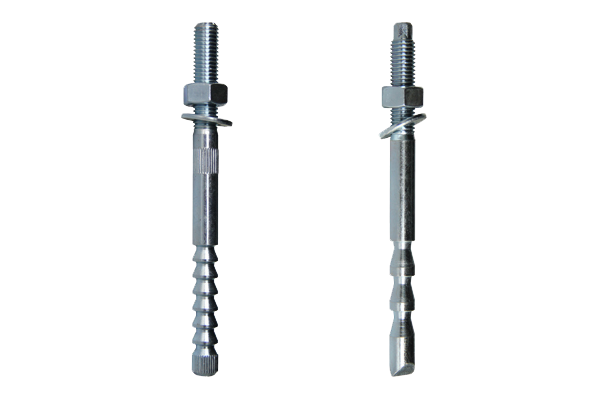
Figure 1. Reverse-cone anchor (left) and capsule anchor (right)
Similarities between the two
Both reverse-cone anchors and capsule anchors can be used with injection anchoring adhesive; they are adhesive anchoring products for use in cracked concrete.Some regions, such as Zhejiang, have banned the use of high-strength chemical anchors in curtain walls; in such cases only these two products with injection anchoring adhesive can be used for anchoring structural components.
Reverse-cone anchors and capsule anchors of the same specification and model perform almost identically in mechanical properties, and their prices are similar; we basically provide the corresponding product according to customer needs. However, due to our product line, we mainly promote reverse-cone anchors.
The unconventional use of capsule anchors
If you look closely, you will find that the top of the threaded rod of a capsule anchor contains a hexagonal head, which means the product can be installed with a torque electric drill, somewhat similar to the use of high-strength chemical anchors. In fact, many buyers purchase this product together with separate chemical cartridges for use, in the same way as high-strength chemical anchors. Reverse-cone anchors cannot be used this way.
However, the surface of a capsule anchor is relatively smooth, so after the glass capsule is broken during installation it is difficult to mix the resin evenly (the glass does not break effectively), and the actual mixing result can even be worse than that of a high-strength chemical anchor. On the other hand, because the annulus below the embedment depth is larger for a capsule anchor, more chemical resin is needed to fill it, whereas standard chemical cartridges are specially customized for high-strength chemical anchors, so when used with capsule anchors the amount of resin is clearly insufficient, and most manufacturers are unwilling to specially customize chemical resin for capsule anchors. In other words, some construction crews, in order to pass inspection by the supervisor, deliberately use capsule anchors that can be used to anchor non-cracked concrete but pair them with ordinary chemical resin to save costs,when a capsule anchor is used as a high-strength chemical anchor, its actual load-bearing performance is unsatisfactory, even worse than that of an ordinary high-strength chemical anchor, which may create safety hazards.This is another important reason why we have reduced our capsule anchor product line.
Why capsule anchors appeared
Since reverse-cone anchors already have excellent mechanical properties in non-cracked concrete, why did capsule anchors appear on the market? This is a question worth exploring. Some international manufacturers developed this product in order to force differentiation; in the first two or three years, because no domestic manufacturers produced it, they were able to achieve a monopoly, and prices naturally rose. Moreover, the unconventional use of capsule anchors happens to suit people with ulterior motives who cut corners in construction, so it is hard for them not to find a market.