

As a representative thin panel, ceramic tile accounts for about half of the total usage of thin panels. Small tiles can be wet-bonded, but large tiles are mostly installed using either framed back bolt dry-hung cladding or frameless back bolt dry-hung cladding, the former being more common.
The thickness of ceramic tiles commonly available on the market is mostly 7-20 mm, whilescrew-in back bolts can only be used on panels at least 10 mm thick, which means tiles of 7-9 mm cannot be used for dry-hung cladding.
The embedment depth of a back bolt is 1/2 to 2/3 of the panel thickness. We can determine the embedment depth based on the panel thickness and then determine the back bolt model based on the embedment depth. This is the simplest step in back bolt selection, and the models selected in this way are also relatively cost-effective.Because ceramic tiles are thin panels, only screw-in back bolts are recommended here (hammer-in back bolts can damage thin panels during installation). The corresponding recommendation table is given below:
Table 1. Recommended back bolt models for dry-hung ceramic tile
Panel thickness | Embedment depth | Recommended back bolt model |
7-9mm | / | / |
10mm | 5mm | M6×5 |
11-14mm | 7mm | M6×7 |
15-18mm | 9mm | M6×9 |
19-20mm | 12mm | M6×12 |
After determining the back bolt model, the material needs to be confirmed. Back bolt materials generally fall into two types: 304 and 316 (L).Apart from some corrosive environments (such as those containing large amounts of Cl ions), 304 material can be used in most working conditions。
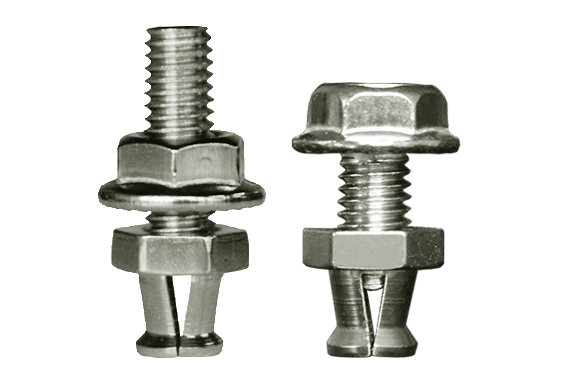
Figure 1 Screw-in back bolt
It is worth noting that two-piece back bolts can also be considered for dry-hung ceramic tile; to some extent,using two-piece back bolts on thin panels results in a lower panel breakage rate。