

If you work in the curtain wall industry, you must often hear the term 'back bolt stone curtain wall'. In fact, this type of curtain wall is only one exterior wall approach within framed back bolt dry-hung cladding. Conventional framed back bolt dry-hung cladding also includes back bolt tile curtain walls (where 'tile' can generally refer to thin panels).
How to choose the framed back bolt method
As the name suggests, the framed back bolt dry-hung method refers to a back bolt panel installation method in which a corresponding framing structure is built between the concrete and the panels to support the exterior wall panels. Depending on characteristics such as panel thickness, the appropriate back bolt dry-hung method can be selected. Generally, thin panels (mostly ceramic tile type panels, 10-20 mm thick) are dry-hung using the back bolt tile curtain wall approach, while panels over 25 mm (generally stone) use the back bolt stone curtain wall approach. Back bolt tile curtain walls mostly use screw-in back bolts, while back bolt stone curtain walls mostly use hammer-in back bolts. The installation positions and number of back bolts are determined by the panel size.
Several common back bolt stone curtain walls
Back bolt stone curtain walls have been used in the market for more than ten years. In addition to increasingly mature back bolt products, consensus has also been reached in the industry on the matching aluminium alloy pendants. Some commonly used combinations are listed below for reference:
(1) Hammer-in back bolt + flat-ear pendant + angle bracket. This is a fairly conventional approach, used in the vast majority of back bolt stone dry-hung cladding. It is relatively low in cost and offers good stability.
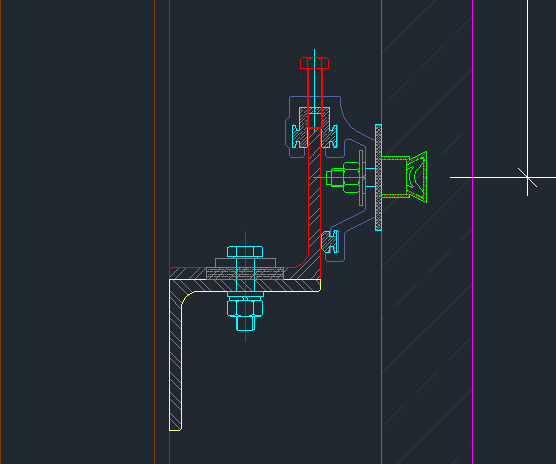
Figure 1. Back bolt flat-ear pendant detail drawing
(2) Hammer-in back bolt + C-type pendant + angle bracket. This approach costs more, but the strength of the entire dry-hung system increases accordingly, making it a good choice for some high-end projects or conditions where the facade panels are heavy.
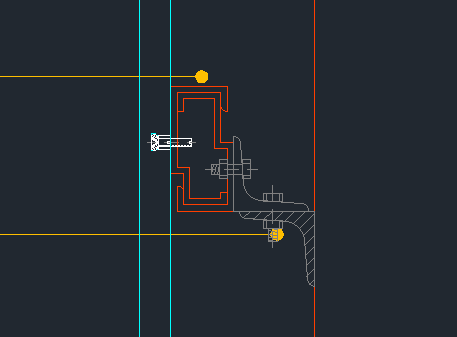
Figure 2. Back bolt C-type pendant detail drawing
Sometimes, to save costs, some companies choose another approach that has long been phased out: hammer-in back bolt + flat H-type pendant + angle bracket. This approach has poor load-bearing performance, and problems can arise if the panels are slightly heavy. Daring does not recommend that construction companies use this dry-hung method.
Several common back bolt tile curtain walls
In earlier years, small ceramic tiles were installed by wet bonding, but over time even small tiles could come loose. Nowadays, the tiles used on exterior walls are becoming larger and larger, and the back bolt tile curtain wall approach is mostly used for fixing them.
(1) Screw-in back bolt + concave-ear pendant + angle bracket. This is a fairly conventional approach and is probably the most widely used back bolt tile curtain wall method at present. It offers balanced cost and good stability.
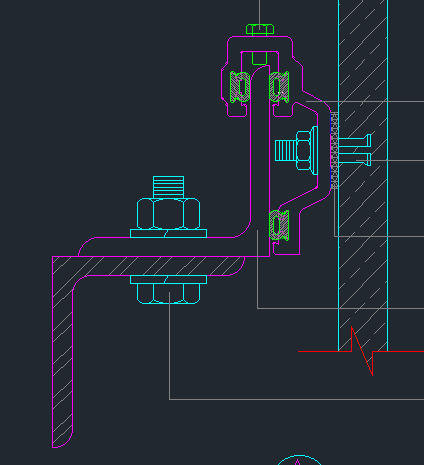
Figure 3. Back bolt concave-ear pendant detail drawing
(2) Screw-in back bolt + C-type pendant + angle bracket. This approach is suitable for some high-end projects and cases with large panel faces; it provides excellent stability.
(3) Screw-in back bolt +concave H-type pendant+ angle bracket. This approach costs slightly less than the first. Although its load-bearing performance is not as good as the first approach, because ceramic tiles are relatively thin, this approach is generally still safe. If the panel face is large, try not to use this approach.
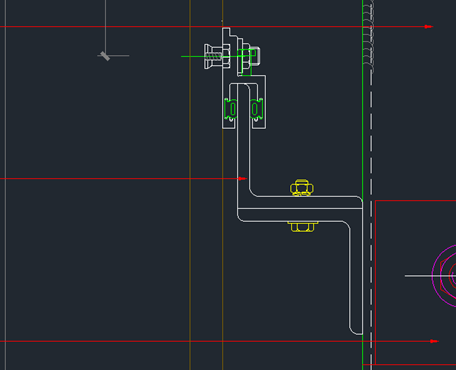
Figure 4. Back bolt concave H-type pendant detail drawing
Back bolt dry-hung cladding of special panels
It is worth noting that for some special panels, such as cement fiber board, which are mostly 14 mm or 16 mm thick, it is difficult to guarantee the safety of the entire curtain wall using the back bolt tile curtain wall approach. Another example is a stone such as travertine, whose panels have relatively low density; although the thickness is sufficient for installation with hammer-in back bolts, the panels themselves are expensive, and the high breakage rate of hammer-in back bolts can greatly increase the overall panel cost. In such cases it may be necessary to consider using aanti-loosening back boltfor dry-hung cladding to ensure safety and a low breakage rate. The aluminium alloy pendants used with anti-loosening back bolts are the same as those for hammer-in back bolts.