

In many years in this industry, we often hear customers calling to buy large-size undercut anchors such as M24, but these customers usually end up contacting several or even dozens of manufacturers through various means without success and still do not know why. Here we intend to explain this issue comprehensively so that you gain a new understanding of the specifications and models of undercut anchors.
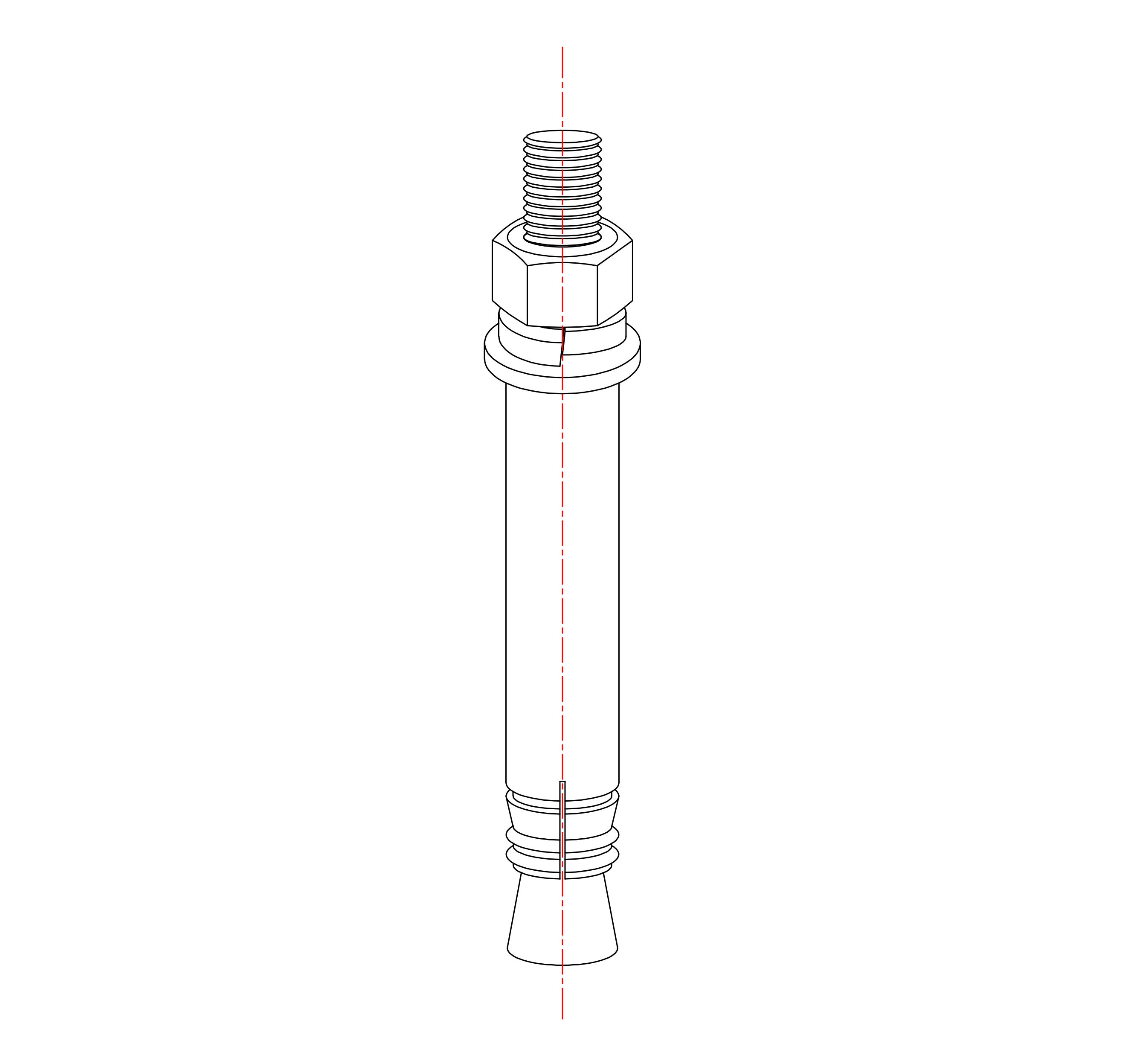
Figure 1 Schematic diagram of an undercut anchor
How concrete is poured
To understand concrete pouring, we must first know the classification of concrete. Depending on the material, concrete can generally be divided into plain concrete and reinforced concrete. Plain concrete is a structure made of concrete without reinforcement or without load-bearing reinforcement. Reinforced concrete refers to a composite material formed by adding steel bars, steel mesh, steel plates, or fibers to concrete so that they work together to improve the mechanical properties of the concrete.
Applications such as curtain walls and rail transit require higher-strength reinforced concrete. Beams or slabs with relatively high load requirements have a very high rebar density, and during pouring the spacing between adjacent steel bars may be only 50 mm.
Naming of undercut anchors
Undercut anchors mainly come in two types: the undercut anchor (which requires pre-reaming) and the self-undercutting anchor (which does not). Taking an M12*80/125 undercut anchor as an example, M12 refers to the threaded rod diameter, but the sleeve diameter of an undercut anchor can reach 18 mm, so drilling requires an M18 straight hole and a reamed diameter of about M24. You may feel this is not very difficult, but if the specification is M20*160/260, the straight-hole diameter becomes M28 and the reamed diameter reaches M35, figures that are hard to accept for a typical construction crew.
Drilling holes for large-size undercut anchors is extremely difficult
As mentioned above, drilling for an M20 undercut anchor is already very difficult; making an M28 hole in C30 concrete can take as long as 10 minutes, not counting the time for reaming. Based on the rebar density mentioned above, the probability of hitting rebar may be as high as 80%. Once rebar is hit, the hole cannot be drilled any further and the position must be changed to drill a new hole. Such a time-consuming and laborious task may be something construction workers are unwilling to do. ThereforeBasically no M20 undercut anchors are available off the shelf on the market; self-undercutting anchors may still be produced by some manufacturers because they require no reaming, but their usage is also extremely small.