

When it comes to concrete screw anchors, we have to mention their anchoring mechanism. Previously, anchors used in construction were mostly of two types: undercut anchors and expansion anchors. Generally, undercut anchors have better mechanical properties and stability than expansion anchors. The concrete screw anchor is neither an undercut anchor nor an expansion anchor; it has a new type of anchoring form.
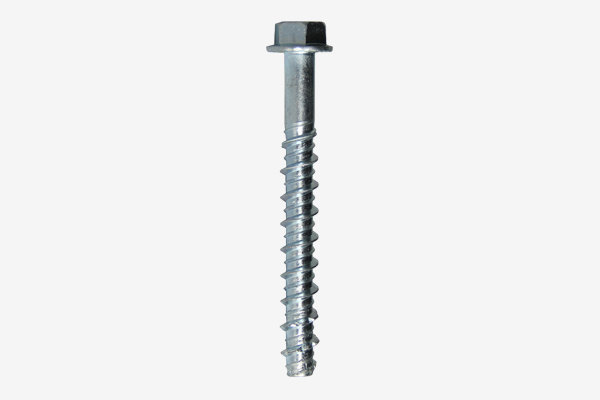
Figure 1. Concrete screw anchor
A special anchoring form
Everyone has probably seen screws with threads that can be driven into wood with a screwdriver. The anchoring principle of the concrete screw anchor is similar to that of such a screw; it isanchored by means of the teeth on the outer wall of the anchor cutting into the concrete and matching the threaded opening formed in the concrete. This method provides good anchoring performance. Taking the M8×75 size as an example, in C30 concrete with an embedment depth of less than 60 mm, the failure mode in the pull-out test is concrete cone failure, and the pull-out failure load can reach about 30 kN. Its mechanical properties exceed those of more than half of all anchor types, thanks to the fact that concrete screw anchors are made from class 8.8 or higher carbon steel or 304/316 stainless steel.
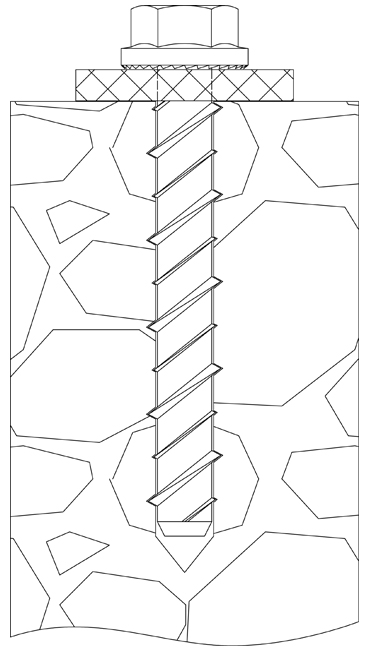
Figure 2. Installation method of the concrete screw anchor
Practical for temporary anchoring
Concrete screw anchors are easy to install and can be used for anchoring curtain walls, guardrails, elevators, and other objects. Moreover, a close look reveals that the installation of screw anchors is reversible: the anchor can be unscrewed by reversing a torque electric drill. Thereforethis type of anchor has a property that other anchors do not: it is removable. Under some special working conditions we can use concrete screw anchors for temporary anchoring, and after use the anchors can be removed and reused. On the one hand this reduces material waste, and on the other hand removal is relatively simple and does not damage other structures.
Applications will continue to expand
Appendix F of JGT 160-2017 'Mechanical Anchors for Concrete', which took effect on December 1, 2017, covers the specific tests and requirements for screw anchors; this was the first time this type of anchor was incorporated into a standard. In fact, before the standard took effect, some knowledgeable construction workers were already using this type of anchor. Now,with a standard supporting the product and given its excellent cost-effectiveness, it may become one of the more popular anchors in the future, and more and more construction workers will come to know and understand this type of anchor.