

The framed back bolt installation method is currently the mainstream method for high-end curtain walls. When used together with aluminium alloy pendants, it can distribute the stress across the entire curtain wall, achieving a relatively good seismic performance. However, under some special conditions we can also use the frameless back bolt method, which generally includes two types: insert-hanging and surface-mounted. Although these two methods are non-mainstream back bolt methods, they can sometimes save a significant amount of money for the whole project and even shorten the construction time.
Can be used on low-rise buildings
The frameless back bolt method generally cannot be used on high-rise buildings, because its fixing effect is not as good as that of the framed back bolt method; however, it is mostly used on low-rise buildings. For example, insert-hanging and surface-mounted can be used for the exterior of villas, while to save space, surface-mounted can be used for interior work.
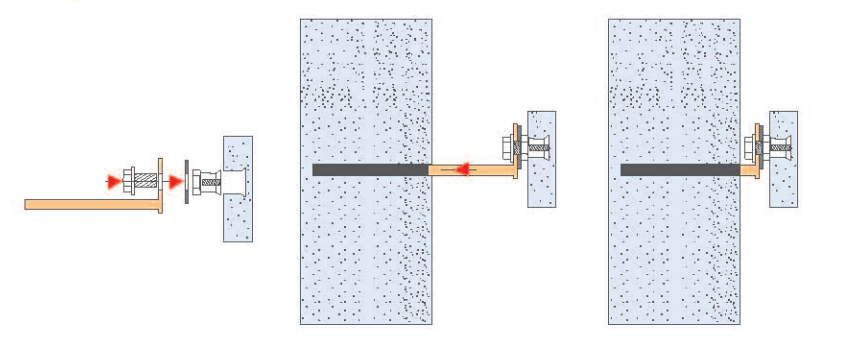
Figure 1. Insert-hanging method
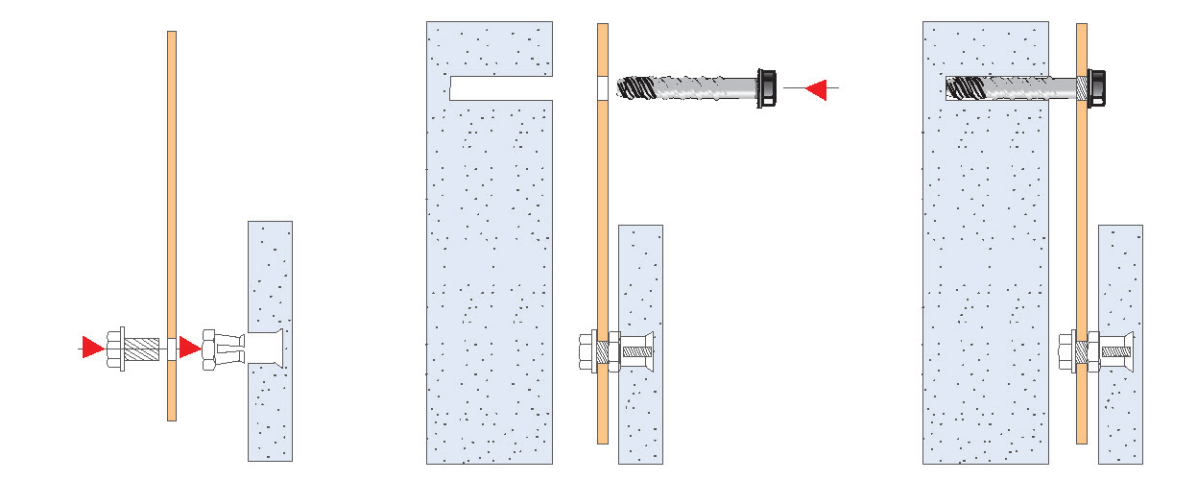
Figure 2. Surface-mounted method
Not only villas, but also relatively low buildings (below 30 m) can use these two back bolt installation methods. Because no framing is required, anchoring material costs can be reduced by nearly half, and the construction process is simpler and the construction time shorter, so overall costs can be cut by about half; this makes them the first choice for some low-rise buildings. However, because few people in the market understand these methods, their usage rate in low-rise buildings is generally low.
Can be used for panel replacement
The framed back bolt installation method is very widely used in practice, but due to installation or various other reasons, a small number of panels are often damaged, which creates certain safety hazards and affects the appearance of the entire curtain wall; at that point the damaged panels need to be replaced. Many designers or construction workers do not understand how to replace panels, so here is a brief explanation. Back bolt dry-hung cladding relies on the mutual interlocking of aluminium alloy pendants, and generally an insertion depth of about 15 mm is safe enough. When stone is dry-hung on exterior walls, a certain panel joint is left; if the joint is 5 mm, then three panels above need to be raised to create space to replace the damaged panel. At this point, many people will feel this replacement method is troublesome, since several upper panels must be held up at the same time. In that case we can use a simpler replacement method, namely insert-hanging. During construction, simply break up the damaged panel and clean thoroughly, then use the insert-hanging method to fix a whole new panel to the curtain wall. This method of panel replacement is probably the simplest available today.
Construction precautions
The insert-hanging method has no requirements regarding the type of back bolt, but with the surface-mounted method, cement mortar must be filled between the panel and the concrete, and the method itself requires as little internal space as possible, so a two-piece back bolt is generally used. You need to briefly understand the difference between two-piece and three-piece back bolts.
In addition, the traditional insert-hanging back bolt method uses window-type expansion anchors for fixing. Daring recommends using concrete screw anchors for the matching installation. The benefit of this installation is improved mechanical properties and better stability.