

Construction uses many different types of anchors, and expansion anchors are naturally used in large quantities; many installers never use an undercut anchor even after working for several years. Of course, both undercut anchors and expansion anchors fall into the category of mechanical anchors. This article explains in detail the differences between undercut anchors and expansion anchors.
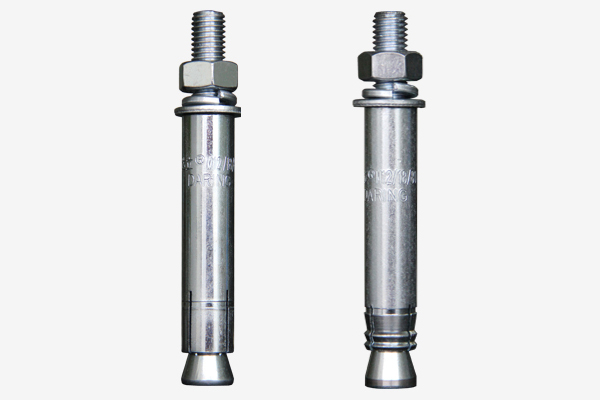
Figure 1 Undercut anchor
Large difference in load-bearing performance
Undercut anchors mainly include two types: self-undercutting anchors and undercut anchors (post-undercutting), the former completing the undercutting at the same time as installation, while the latter requires pre-undercutting. Their load-bearing mechanism is mechanical keying. There are many types of expansion anchors; conventional ones such as the Anka anchor and drop-in anchor are expansion anchors and are relatively easy to distinguish by appearance. However, there are also expansion anchors similar in appearance to undercut anchors, which are used in large quantities. The undercut anchors we supply are often mistaken for expansion anchors. Although such expansion anchors look the same as undercut anchors, they bear load by expansion friction and are clearly different from undercut anchors. In fact, on close inspection you will find that the sleeve wall of an expansion anchor is thinner, while that of an undercut anchor is thicker. If an undercut anchor is used as an expansion anchor, its load capacity may even be lower than that of an expansion anchor (with a thicker wall, it cannot expand when no undercut is made).
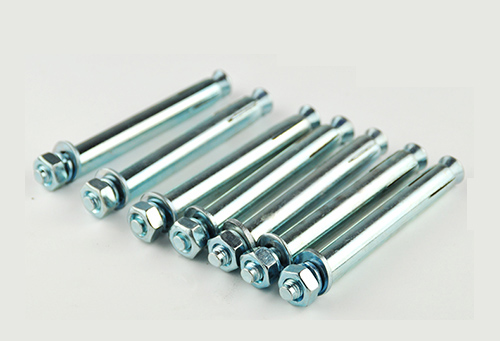
Figure 2 Expansion anchor
As mentioned above, undercut anchors use pre-undercutting or self-undercutting and bear load through mechanical keying. Because of their large bottom undercut and small upper straight hole, their load capacity can generally reach the ultimate strength of the anchor material. For example, an M12 class 5.8 carbon steel (grade 35 steel) undercut anchor can reach a tensile load capacity of 60 kN, failing by the anchor breaking. Expansion anchors are different: load bearing through expansion friction involves considerable uncertainty, and some anchors, such as the Anka anchor, can also undergo displacement in pull-out tests. Their load capacity is often lower, averaging even half that of an undercut anchor of the same specification, and pull-out results are mostly anchor pull-out.The main difference between the two lies in the large disparity in load-bearing performance resulting from their different load-bearing mechanisms.
Different scopes of application
GB 50367-2013 'Code for Design of Strengthening Concrete Structure' stipulates:
16.1.3 Mechanical anchors used for load-bearing structures shall be undercut anchors with a keying effect. According to their construction, such anchors are divided into three types: self-undercutting, mold-undercutting, and adhesive-mold-undercutting; adhesive anchors used for load-bearing structures shall be special reverse-cone adhesive anchors. Self-tapping screws do not belong to the anchor system and shall not be designed or calculated as anchors.
16.1.4 In structures in seismic fortification zones and in members directly subjected to dynamic loads, expansion anchors shall not be used as connections for load-bearing structures.
In short,expansion anchors must not be used to fix load-bearing structures; instead, codes require the use of undercut anchors or reverse-cone anchors.
Significant price difference
Because undercut anchors use better and more material than expansion anchors, their price is naturally considerably higher. However, price is directly proportional to safety: during construction we must comply with national codes, since ensuring safety is the prerequisite for the entire project.