

The self-undercutting anchor, also known as a self-cutting anchor, is an undercutting mechanical anchor that is relatively simple to install, mostly used for anchoring between concrete and other high-load structural components.In practice, self-undercutting anchors are often used as a substitute for undercut anchors (post-cut anchors) in construction.
The installation method for undercut anchors is relatively complex. We often receive complaints that an anchor carries very little load, and when we rush to the site we find that only a straight hole was drilled and no undercut was made, so the installed anchor performs even worse than an expansion anchor. In the past two years, the advent of self-undercutting anchors has solved this problem well: through a special cutting design and with electric installation tools, they can easily cut into concrete without pre-undercutting to achieve mechanical locking. Moreover, because they require no undercutting, the probability of hitting reinforcing bars during drilling is lower than with undercut anchors; in practice M20 self-undercutting anchors may be used, but M20 undercut anchors are basically not used.
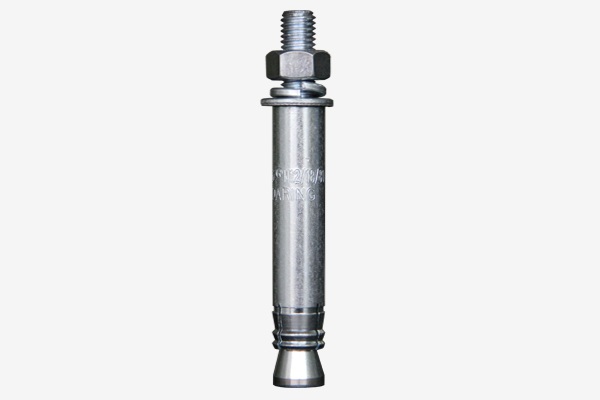
Figure 1. Self-undercutting anchor
The installation steps for a self-undercutting anchor are as follows:
(1) Use a straight-hole drill bit to drill a hole of the corresponding diameter and depth;
(2) Use a dust blower to blow out the hole until no dust comes out;
(3) Use a hammer drill with the corresponding installation tool to drive the sleeve of the self-undercutting anchor downward until the bottom expands, completing the anchorage.
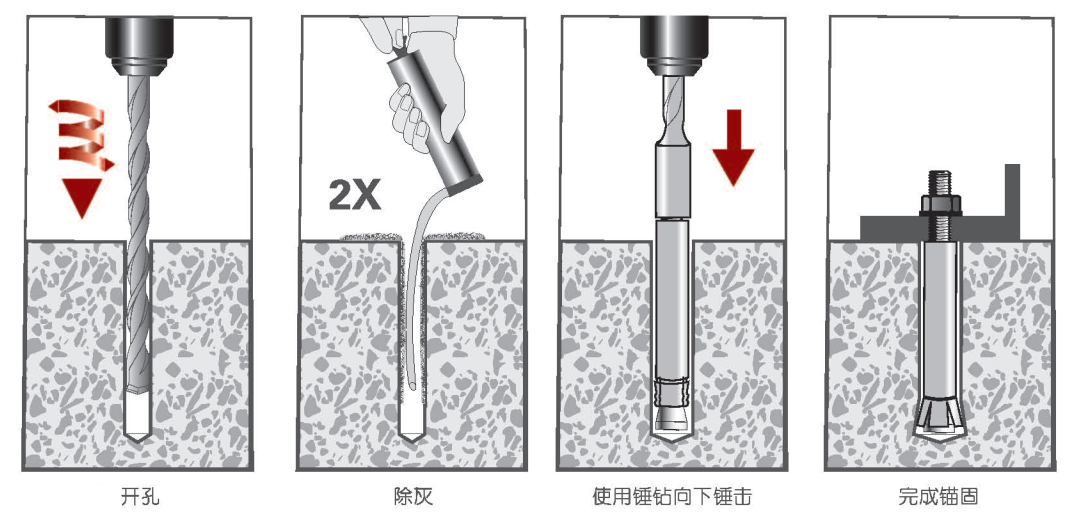
Figure 2. Diagram of self-undercutting anchor installation
P.S. Installation requires the following four installation tools: a rotary hammer, a straight-hole drill bit, a dust blower, and a driving sleeve. The manufacturer provides the driving sleeve; the others may need to be selected and purchased separately.
Compared with the various types of chemical anchors, the dust removal step for self-undercutting anchors is relatively simple: it is only necessary to blow the dust out of the hole wall, with no need for a second cleaning with a brush. Undercut anchors are most vulnerable to brute-force installation (driving the anchor with maximum force without making an undercut), whereas self-undercutting anchors are not affected even by such treatment.