

The undercut anchor, also known as a mold-undercut anchor or post-cut anchor, is a very mature product among building anchors, with excellent load capacity and seismic performance. Curtain wall codes explicitly stipulate that embedded plates must be fixed with two undercut anchors and two chemical anchors.
The installation of undercut anchors is relatively complex;after drilling, the hole must be undercut in order for the anchor to develop its full performance. Because undercutting is required, workers have a relatively high probability of hitting reinforcing bars while undercutting; once a bar is hit, the undercut cannot be made, especially for large-size anchors. Therefore,undercut anchors of M20 and above are rarely used.
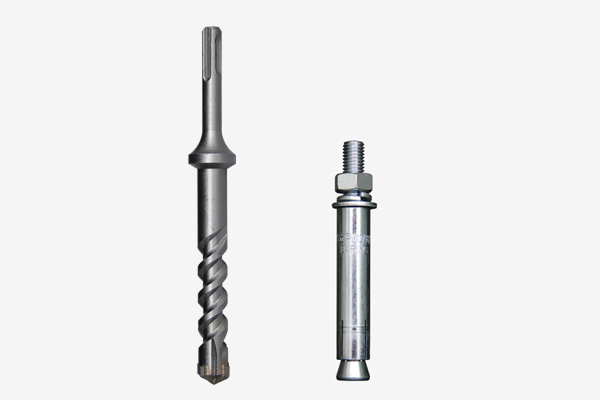
Figure 1. Special undercutting drill bit (left) / undercut anchor (right)
Compared with self-undercutting anchors, properly installed undercut anchors offer higher safety performance. Their installation steps are as follows:
(1) Use a straight-hole drill bit to drill a hole of the corresponding diameter and depth;
(2) Use a special undercutting drill bit, rocking it at the bottom, to expand the bottom into a wedge-shaped hole;
(3) Use a dust blower to blow out the hole until no dust comes out;
(4) Use a hammer or rotary hammer together with a driving sleeve to drive the undercut anchor downward until the bottom expands, completing the anchorage.
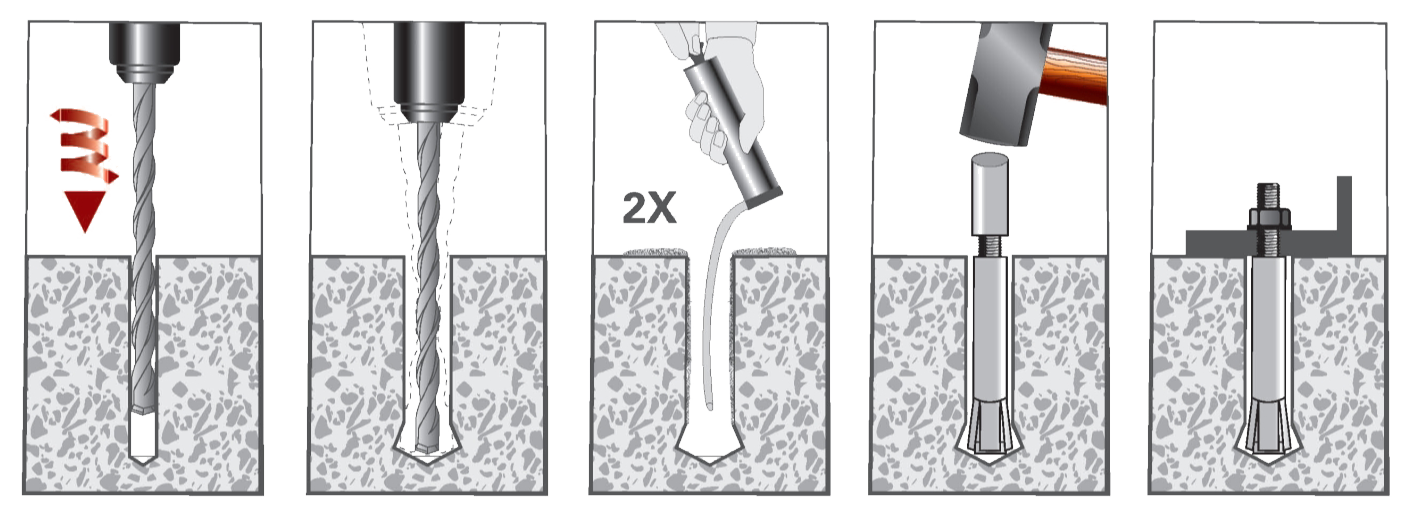
Figure 2. Diagram of undercut anchor installation
P.S. Installation requires the following four installation tools: a rotary hammer, a straight-hole drill bit, an undercutting drill bit, a dust blower, and a driving sleeve. The manufacturer provides the undercutting drill bit and driving sleeve; the others may need to be selected and purchased separately.