

As the name suggests, a two-piece back bolt is a back bolt assembled from two components, while a three-piece back bolt is assembled from three components.Both types are screw-in back bolts; they are simply two forms of the screw-in back bolt.
Generally, most screw-in back bolts used on the market are of the three-piece type, as shown in Figure 1, comprising three components: a back bolt head, a set screw, and a flange nut. More than 80% of the screw-in back bolts used in construction are of this type. One advantage of the three-piece back bolt is that it can be used directly without determining the pendant thickness in advance; even if the pendant is changed during site work, there is little impact.
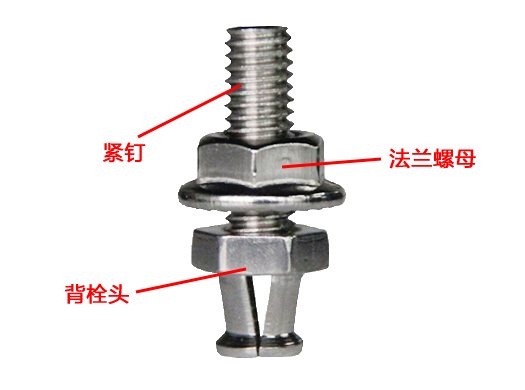
Figure 1. Three-piece screw-in back bolt
The two-piece type, which is less commonly used now, consists of a back bolt head and a flanged threaded rod. The length of the matching flanged rod must be determined according to the thickness of the aluminium alloy pendant; once a rod of the corresponding length has been matched, the pendant thickness can no longer be changed (a pendant of the same thickness may be substituted).
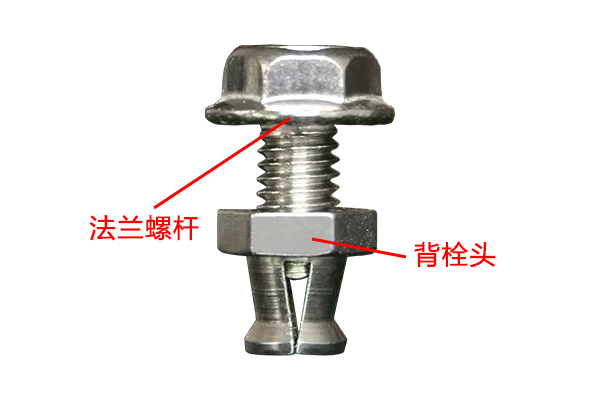
Figure 2. Two-piece screw-in back bolt
Of course, the two-piece back bolt has inherent advantages. Screw-in back bolts are mostly used on thin panels (generally under 20 mm), and the flanged rod acts as a stop, meaning that once installed in place it will not continue downward and punch through the thin panel, which is already prone to damage. By contrast, the three-piece back bolt finds it difficult to solve this problem. Moreover, some special methods such as surface mounting require saving as much internal space as possible, which only the two-piece back bolt can achieve.
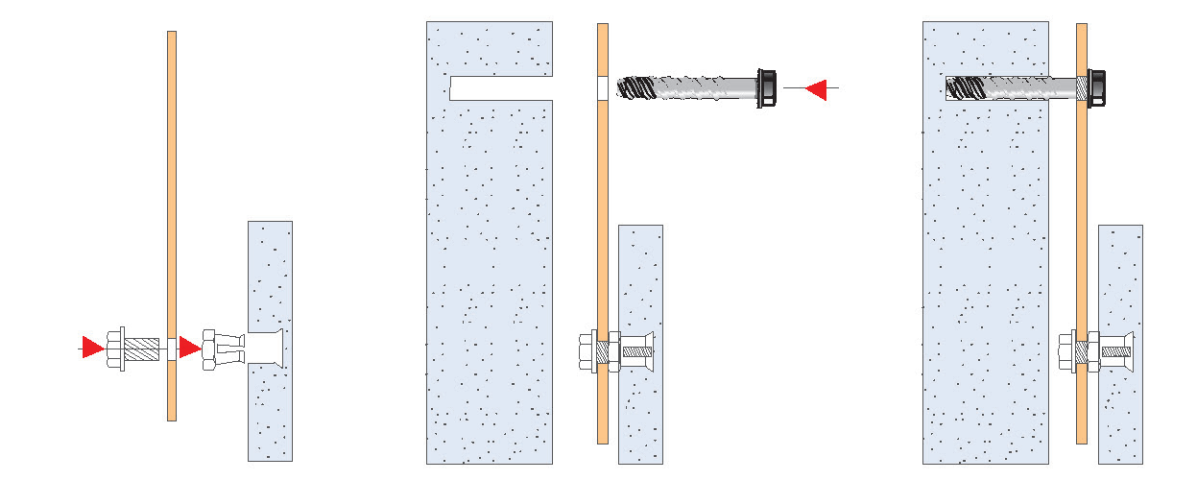
Figure 3. Surface-mounted method
In brief:The practicality of the two-piece back bolt is no worse than that of the three-piece back bolt; provided the pendant thickness is not changed arbitrarily, the two-piece back bolt is easier to use.