

As the name suggests, a chemical anchor is an anchoring product formed by combining a high-strength anchor with a resin adhesive to anchor other structural components.
Among building anchoring materials, chemical anchors are probably used in far greater quantities than any other material. This has given rise to many types of chemical anchors and a large number of chemical anchor manufacturers on the market. Compared with mechanical anchors, chemical anchors are more prone to problems, and in most cases the problem lies with the adhesive.
Classification of chemical anchors
At present, chemical anchors are mainly divided intohigh-strength chemical anchors、Reverse-cone chemical anchorandcapsule chemical anchor, among which the high-strength chemical anchor must be used with a resin capsule (Hilti uses a soft-film package), while the capsule chemical anchor and the reverse-cone chemical anchor are used with injected epoxy anchoring adhesive. Because the top of the capsule chemical anchor has an external hex design, some construction companies use it directly with a resin capsule. We have carried out corresponding tests: when used with a capsule anchor, a resin capsule of the same specification does not contain enough adhesive, and its mechanical properties are even inferior to those of a chemical anchor of the same specification, creating certain safety hazards. Daring does not encourage this combination.
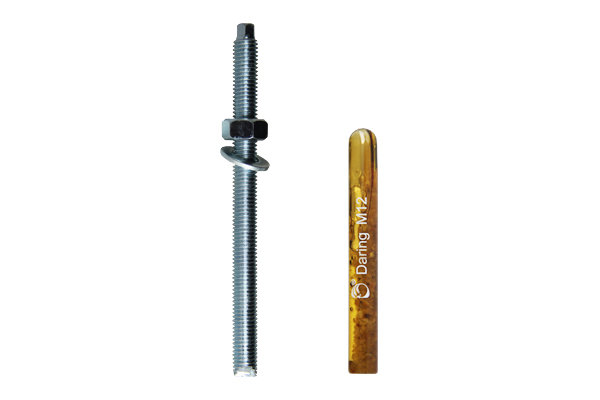
Figure 1. High-strength chemical anchor (left) / resin capsule (right)
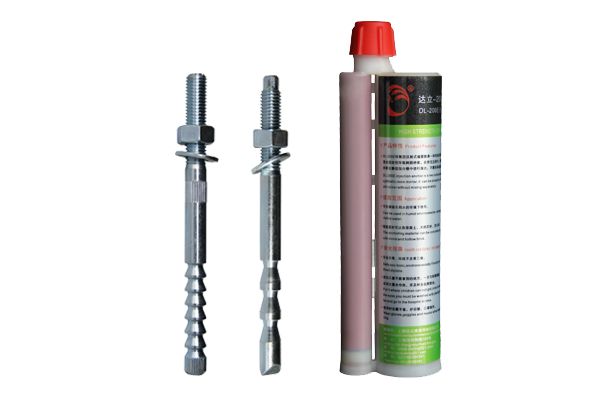
Figure 2. Reverse-cone anchor (left) / capsule anchor (center) / injection anchoring adhesive (right)
Applications of chemical anchors
High-strength chemical anchors are mostly used for anchoring curtain wall structural components and can also be used to fix machinery and equipment. However, because they place certain requirements on the stability of mechanical properties, in practice large-size high-strength chemical anchors are often used with epoxy anchoring adhesive to meet the corresponding needs. It should be noted that under certain conditions high-strength chemical anchors cannot be used in cracked concrete; for example, some regions such as Zhejiang have prohibited the use of ordinary chemical anchors (i.e., high-strength chemical anchors) in curtain wall projects in their codes.
There is little inherent difference between reverse-cone chemical anchors and capsule chemical anchors, and they are generally interchangeable. Because they are more stable than high-strength chemical anchors, these two types are mainly used in important projects such as rail transit and utility tunnel systems. In regions where codes prohibit ordinary chemical anchors, these two anchor types are more popular.
Differences between adhesives
We know that high-strength chemical anchors are used with resin capsules, while reverse-cone chemical anchors and capsule chemical anchors are used with modified epoxy injection anchoring adhesive. So what are the main differences between these two adhesives? We can explain this with a table:
Table 1. Comparison of the two adhesives
Characteristic | Resin capsule | Modified epoxy injection anchoring adhesive |
Composition | Quartz sand, unsaturated resin, curing agent | Epoxy resin |
Mechanical properties | Good | Better load capacity when anchoring large-size anchors |
Stability/durability | Moderate | Excellent |
Curing time | Fast | Slow |
Application areas | Non-cracked concrete | Non-cracked concrete / cracked concrete |
Price | Low | Relatively high |
Here is a concept worth mentioning: the difference between modified epoxy resin and epoxy resin. Generally, epoxy resin cures very slowly, which seriously delays the construction schedule, so manufacturers adjust the chemical composition of the epoxy resin to reduce its curing time; the resulting adjusted epoxy resin is modified epoxy resin. However, even after such adjustment, its curing time is still considerably longer than that of a resin capsule. Taking the current outdoor temperature of 40°C as an example, a resin capsule can cure completely in 20–30 minutes, whereas modified epoxy anchoring adhesive takes about 24 hours to cure completely, which means that an anchor installed on the first day can only secure the fixed object on the second day. At lower temperatures, even longer times are required.
At present, there are actually few domestic manufacturers that can make these two types of adhesive well, especially modified epoxy adhesives, which often suffer from crystallization and leakage. Once leakage occurs, the two-component A/B adhesive may be unevenly mixed, creating safety hazards. By comparison, the process for resin capsules is somewhat more mature; however, because of cutthroat competition in the market, most resin capsules contain varying amounts of thinners, resulting in reduced mechanical properties. We hope purchasers will carry out their own tests when buying to ensure product performance.
In brief, the resin capsule is used with high-strength chemical anchors; it is low in price and has a short curing time, meets the needs of and suits most projects, and is currently one of the most widely used anchoring materials in construction. Modified epoxy injection anchoring adhesive has certain advantages in mechanical properties, stability/durability, and special application areas, and is mostly used in regions where chemical anchors are not permitted and in some high-end projects.