

We know that most curtain wall projects need to be designed in advance. However, although designers can grasp the overall structure, they often have only a limited understanding of back-bolt stone curtain walls and may face certain difficulties when selecting back bolts. This article gives a detailed explanation of how to select back bolts for curtain wall projects, to help you choose back bolts quickly.
Selecting back bolts based on panel thickness and panel type
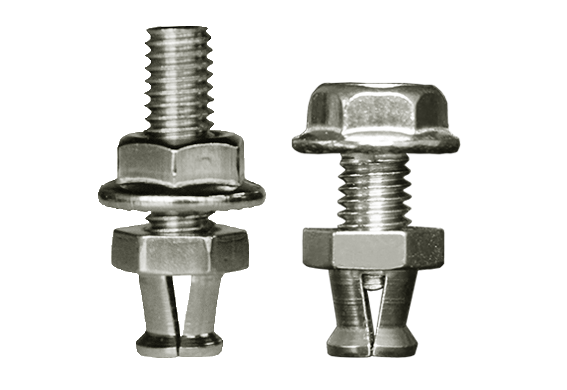
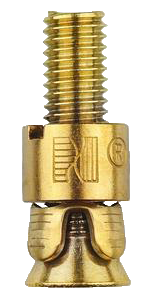
Back bolts are mainly divided into three types: screw-in back bolts, hammer-in back bolts, and anti-loosening back bolts. As their names suggest, screw-in back bolts are installed by screwing them in, while hammer-in back bolts are installed by striking them with a hammer. Anti-loosening back bolts have a unique anti-loosening effect and are installed by screwing them in with an electric torque installation tool.
Screw-in back bolts are mostly used to anchor thin panels over 10 mm and up to 20 mm (including 20 mm); for example, the commonly used 12 mm ceramic tile uses an M6×7 screw-in back bolt. Of course, if a client insists on using screw-in back bolts to anchor 30 mm panels, it is not impossible; the author has encountered many designers unwilling to change their schemes, which is frustrating. Due to high drilling precision requirements and persistently high prices, the market share of screw-in back bolts will only continue to shrink. In previous years there were quite a few incidents of panels falling from dry-hung curtain walls using screw-in back bolts; readers can search for details themselves.
Hammer-in back bolts are mostly used on thick panels above 25 mm, such as high-density panels like granite and marble. The hammer-in back bolt is currently the most widely used back bolt for dry-hung stone. It is worth noting that the hammer-in back bolt costs less than the screw-in back bolt and also has lower drilling precision requirements, so its safety and value for money are relatively higher. This is the main reason why hammer-in back bolts hold a market share of over 80%.
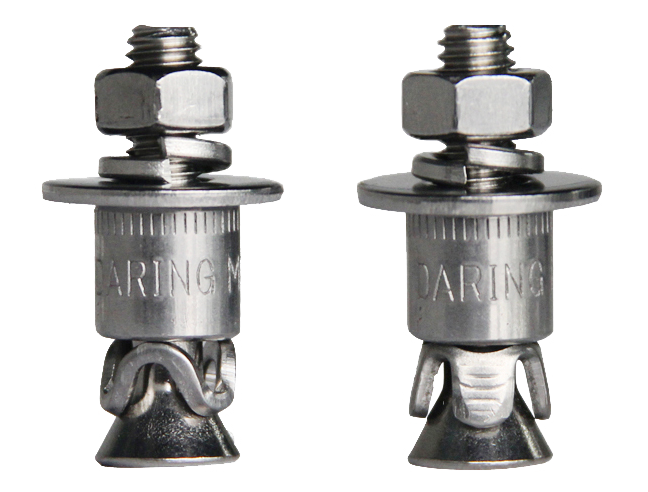
Anti-loosening back bolts are mostly used on medium-to-thick panels above 16 mm and work particularly well for dry-hung soft or low-density panels. Take sandstone or travertine, for example: because of their low density and soft material, screw-in back bolts are easily pulled out and hammer-in back bolts can easily break the panel; under such conditions the anti-loosening back bolt achieves the best anchoring result. Another example is standard 16 mm cement fiber board: its low thickness rules out hammer-in back bolts, and screw-in back bolts also fail to give good anchoring (poor load performance), so only the anti-loosening back bolt can ensure safety.
Select back bolts based on design values and design material
This is fairly easy to understand: small panels (generally 600 mm × 900 mm and below) can use M6 back bolts, but some panels are heavier and place greater demands on the shear resistance of the bolts; the author has encountered panels of 3,200 mm × 1,600 mm, where M8 back bolts are required. Of course, these are not arbitrary statements — the choice between M6 and M8 must be based on specific calculation values. By referring to the author's earlier discussion of back bolt hole layouts on panels, designers can estimate the number of back bolts required, helping the budget department calculate costs.
In addition, back bolts are available in two materials, 304 and 316(L). The designer may choose one material based on multiple factors such as load conditions and environment; designers can of course also consult Daring to select the appropriate size of back bolt.
Selecting back bolts based on embedment depth
We know that back bolts come in different specifications, as follows:
Click to learn about screw-in back bolt specifications (after opening, select "Specifications and Dimensions");
Click to learn about hammer-in back bolt specifications (after opening, select "Specifications and Dimensions");
Click to learn about anti-loosening back bolt specifications;
The dimensions shown in the figure are the standard dimensions of back bolts; if needed, back bolts can be specially customized. The embedment depth of a back bolt is specified according to national codes, and is generally 1/2 to 2/3 of the panel thickness. Taking 30 mm thick granite as an example, an embedment depth of 15 mm–20 mm is acceptable; however, considering that the 15 mm embedment is the most common model and the lowest in price, a 15 cm embedment depth is optimal. In practice, however, the thickness of many stone panels is often greater than 3 cm. The author once encountered an 80 mm thick panel and ultimately selected an M8 hammer-in back bolt with a 50 mm embedment depth.
It is worth noting that customized back bolts require matching drill bits when drilling, and the drill bits are also customized; the lead time is therefore longer than for standard models and the price is slightly higher.
Selecting back bolts based on budget
Any project that disregards the budget is unrealistic; even top-tier high-end projects exercise budget control to ensure that money is spent effectively. Generally, for panels other than thin panels, screw-in back bolts, which are more expensive than hammer-in back bolts, are not selected. Anti-loosening back bolts are imported-brand back bolts and are relatively expensive; except for a few special panel types (such as the sandstone and cement fiber board mentioned above) where they are indispensable, hammer-in back bolts can be used in other conditions. Of course, it is understandable for high-end projects to choose imported-brand back bolts; however, we hope that owners and contractors will keep their eyes open and learn more about back bolts, so that they can obtain the best anchoring performance for the least money.