

The mechanical properties and stability of injection anchoring adhesives have always been representative of construction adhesives. Currently, injection anchoring adhesives produced by many domestic manufacturers have passed Grade A adhesive certification.
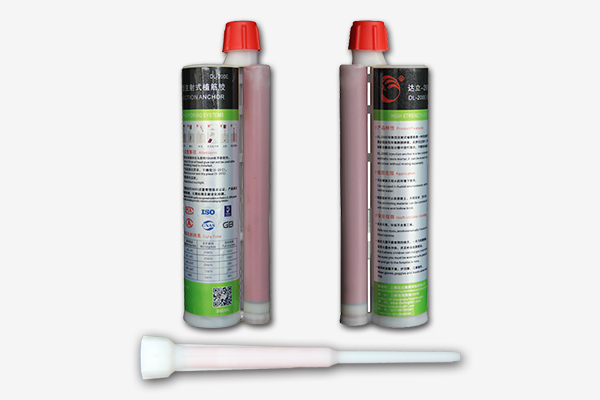
Figure 1 Injection anchoring adhesive
Materials of injection anchoring adhesives
Most people do not knowthat injection anchoring adhesives can be divided into two types: epoxy and vinyl. While manipulating domestic standards and codes, some international brands have been switching the weight given to construction adhesives back and forth between epoxy and vinyl, thereby winning adhesive-related projects at high prices through technical barriers.
Having worked in this industry for many years, the author knows a little about both products. Vinyl resin injection anchoring adhesives, relatively speaking, have the advantage of fast curing but hardly any other advantages; in Grade A adhesive testing, most test items are barely passed. If there is no schedule rush, they are not recommended. Epoxy resin injection anchoring adhesives cure slightly slower, but their overall performance in all respects far exceeds that of vinyl resin injection anchoring adhesives, and they are currently the more commonly used type.
The seasonality of injection anchoring adhesives
Temperature has a great influence on the raw materials of anchoring adhesives: at lower temperatures the resin flows poorly, while at higher temperatures the resin flows better. Thereforemerchants sell anchoring adhesives as winter-grade and summer-grade products, and the raw material formulations of the two differ. It is worth mentioning that when summer-grade adhesive is used in winter, its flow becomes very poor, making it harder for workers to dispense with the special applicator gun, and excessive pressure inside the tube may cause leakage or bursting of the adhesive tube.
Therefore, if construction personnel find that the adhesive flows too well or too poorly for the current season, the anchoring adhesive being used may not be for the current season, and they can seek a solution from the merchant.
The shelf life of injection anchoring adhesives
Most of the time, contractors purchase and use construction materials immediately, but there are special cases, such as a temporary scheme change after purchase or material left over after project completion. When the product is used next time, it is necessary to determine whether it can still be used.
Daring injection anchoring adhesive has a shelf life of 1 year at 20°C away from direct sunlight.
This is the storage requirement given by Daring and the shelf life under those storage conditions. However, storage departments can hardly achieve such conditions, and the shelf life will naturally be greatly reduced. Therefore, the author suggeststhat injection anchoring adhesive left unused for a period of time be re-tested by proportional mechanical sampling. If the mechanical properties show no reduction, it indicates that the batch of injection anchoring adhesive can still be used normally.
Differences from pail-packed AB adhesive
Compared with pail-packed AB adhesive, injection anchoring adhesive is undoubtedly much more expensive, but if you understand the difference between injection anchoring adhesive and pail-packed anchoring adhesive, you will find that injection anchoring adhesive is more convenient to use and saves more labor cost.